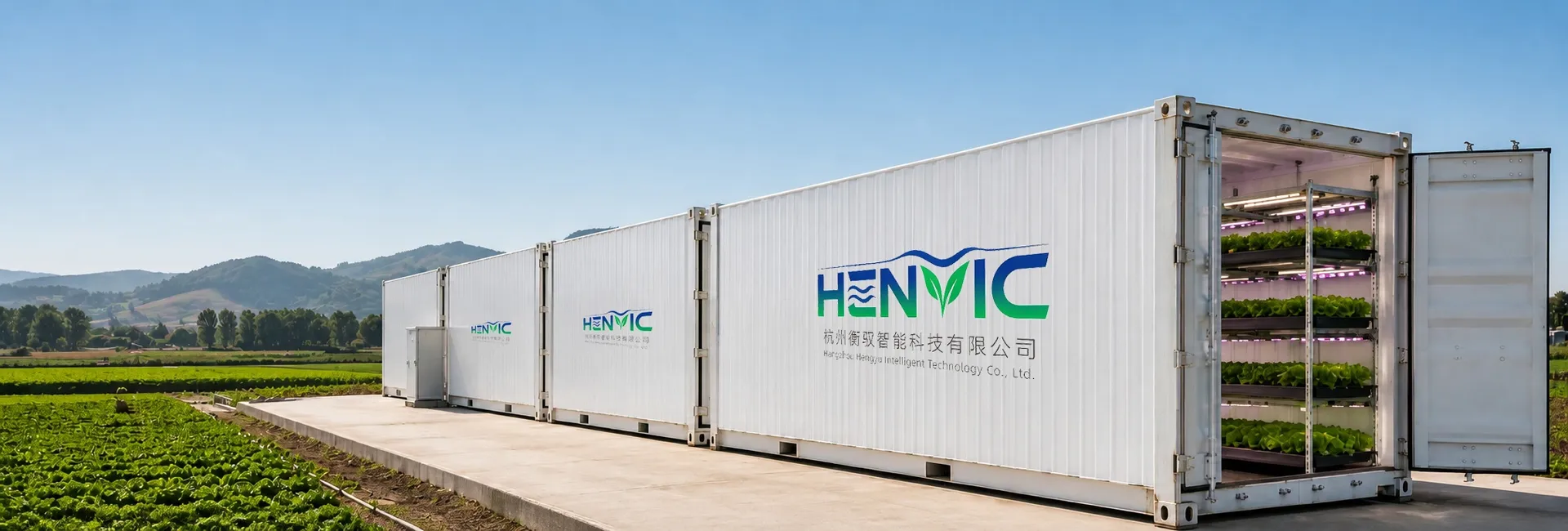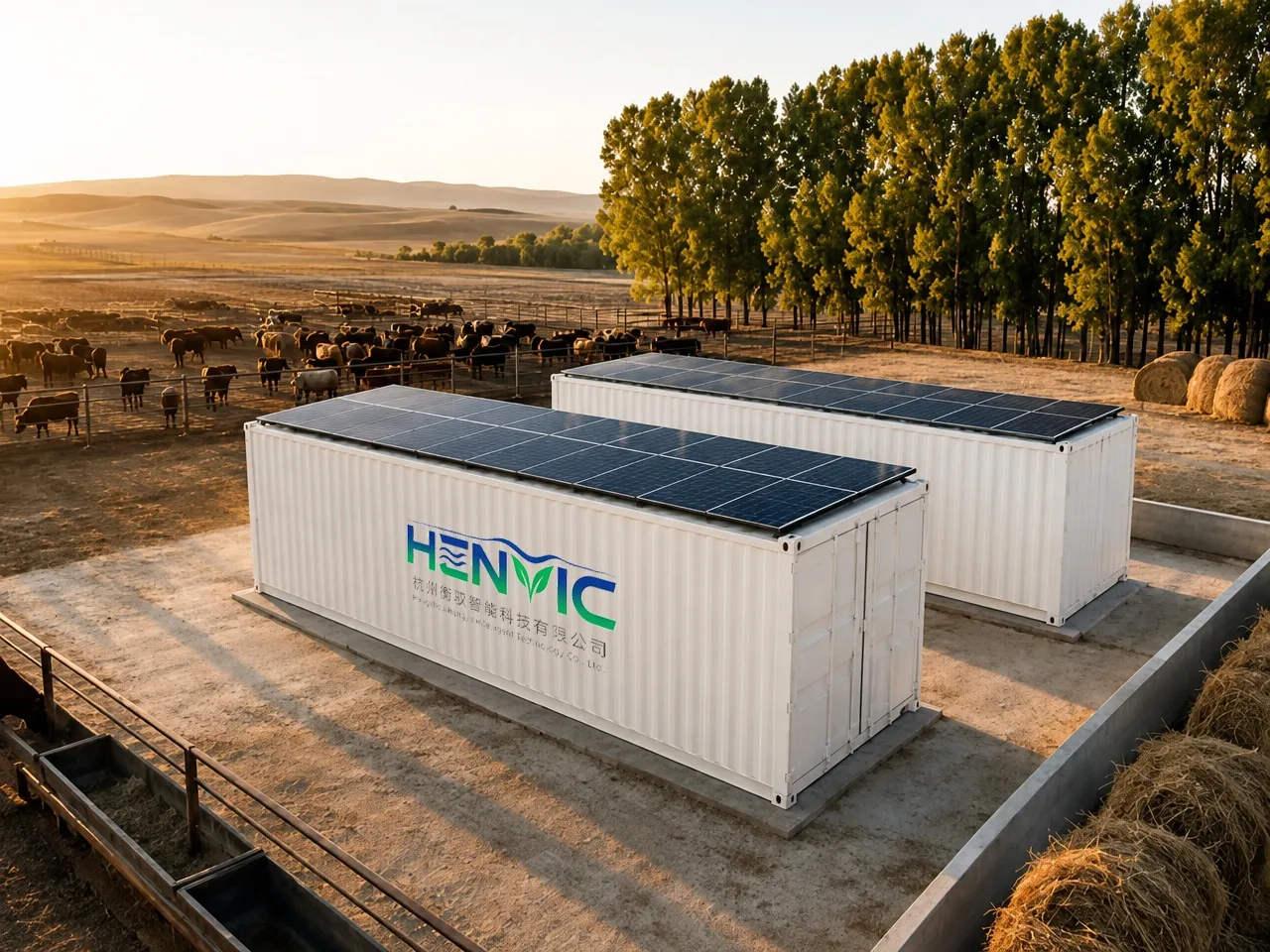
The three-year failure rate isn't caused by bad technology. It's caused by a business model that takes on the capital cost of a factory, the energy bill of a data centre, and the labour needs of a greenhouse — while selling into a market that prices its output like ordinary vegetables. The growing works fine. The arithmetic doesn't.
The capital stack: you're buying a factory, not a farm
A 40-foot container farm typically lands between roughly
80
,
000
𝑎
𝑛
𝑑
150,000 fully outfitted, depending on tier count, lighting, HVAC capacity, and automation. That figure bundles a refurbished or purpose-built container, racking, LED arrays, a climate control system, fertigation hardware, sensors, and a control layer.
The cost drivers people underestimate are the invisible ones. Dehumidification is often quoted separately and costs real money on its own — in a sealed box with transpiration from thousands of plants and water evaporating from every channel, moisture removal runs continuously. Environmental control isn't a thermostat; it's a year-round, minute-by-minute load. And if the site needs concrete, power upgrades to a three-phase supply, or structural work, those costs appear after the equipment quote and before the first harvest.
Financing this at typical small-business rates means debt service sits at the front of the queue every month — before electricity, before wages, before you've sold a single head of lettuce. Most operators build their unit economics with the equipment price as the anchor and treat financing as a footnote. It's the other way round.
Electricity is the single line that decides whether you survive
Lighting, cooling, dehumidification, circulation, and pumps run constantly. The literature on container farms consistently shows energy as the largest single operating expense — commonly cited in the range of a quarter to over half of total operating cost, with lighting and dehumidification dominating.
This produces a cruel feedback loop. You can cut the light to save power, but you lose yield and head weight, which raises cost per kilogram. You can run lights harder to grow more, but the kilowatt-hours climb faster than the revenue does. There's no setting where both numbers behave. The only genuine escape is a low electricity price — and cheap power is rarely available exactly where the people who will pay premium prices for local greens happen to live.
That geography mismatch is where a lot of business plans quietly break. Cities with disposable income for premium produce have retail electricity rates that punish indoor growing. Sites with cheap power are usually far enough from dense, affluent markets that distribution costs eat the margin. Container farming doesn't fail because nobody thought of this. It fails because people assume they'll be the exception.
Labour: the automation story rarely matches the invoice
Vendors sell a "controlled environment" and the buyer hears "self-operating." The reality is that seeding, transplanting, harvesting, packaging, cleaning channels, sanitising between turns, calibrating sensors, and troubleshooting equipment take time — and industrial HVAC and refrigeration work requires qualified people who aren't cheap.
Most small container farms cannot justify a full maintenance technician, so breakdowns turn into downtime, and downtime in a system with a 30-to-45-day crop cycle doesn't just delay one harvest, it shifts the whole calendar. Missed turns compound. A farm planning ten turns a year and running at seven has permanently cut its revenue by 30% while its fixed costs stay exactly where they were.
The revenue side is where the model is most fragile
Even if the costs behaved, container farms sell into a category where the customer's reference price is supermarket lettuce. Nothing about the product — same species, same appearance — justifies a two- or three-fold premium to a shopper who isn't specifically looking for local, pesticide-free, year-round supply.
The operators who survive usually do it by leaving the commodity market entirely. They sell to restaurants that want consistency and specific varieties, they supply herbs and specialty greens where the price gap is wide, they partner directly with grocery chains on a local-produce shelf, or they operate in markets where outdoor growing genuinely can't supply the demand — long winters, extreme climates, islands, remote communities. In those niches, geography is doing the work that the product alone can't.
Everyone else is competing with a supply chain that has spent fifty years getting very good at shipping cheap lettuce from California, Mexico, or Spain.
Where the money actually leaks in years one, two, and three
Year one is the equipment reality check: costs run above plan, yields run below plan, and the learning curve is steeper than anyone budgeted for. Crop losses during commissioning are normal and rarely provisioned.
Year two is where the optimistic model meets the actual utility bill. This is when the original plan — usually built on assumed yields and assumed electricity rates — fails to reconcile. Many operators respond by pushing light and temperature harder to hit yield targets, which raises the energy bill further, which they then try to offset by cutting something else. The cutting usually lands on maintenance.
Year three is when the deferred maintenance and the accumulated debt service arrive together. Equipment that hasn't been serviced fails at the worst moment. The crop that was going to fund the repair doesn't ship. The operator, having already depleted reserves, exits.
The honest financial picture
Reliable public numbers are scarce because most container farming operations are private and few disclose full accounts. What can be said with confidence is that the profitable operators are not the ones with the best technology — they are the ones who solved three specific problems: they secured power at a rate that makes year-round indoor growing viable, they found a customer segment willing to pay a real premium for what a sealed environment genuinely delivers, and they kept their equipment running long enough to amortise it.
Container farms that treat those as afterthoughts tend to fit the pattern above. The technology works. The market niche exists. The gap between the two is where most of these businesses fall.
What the survivors actually do differently
They start from the price they can command, not the equipment they can install. They model electricity at their real, contracted rate — not a national average — before committing to a site. They design the crop mix around margin per square metre and cycle length, not around what grows easily. They budget for maintenance as a fixed cost rather than an emergency. And they pick locations where the environmental control they're paying for buys them something a greenhouse or an open field can't offer.
None of that is exotic. It's just the unglamorous work that separates a farm that runs from a farm that lasts.