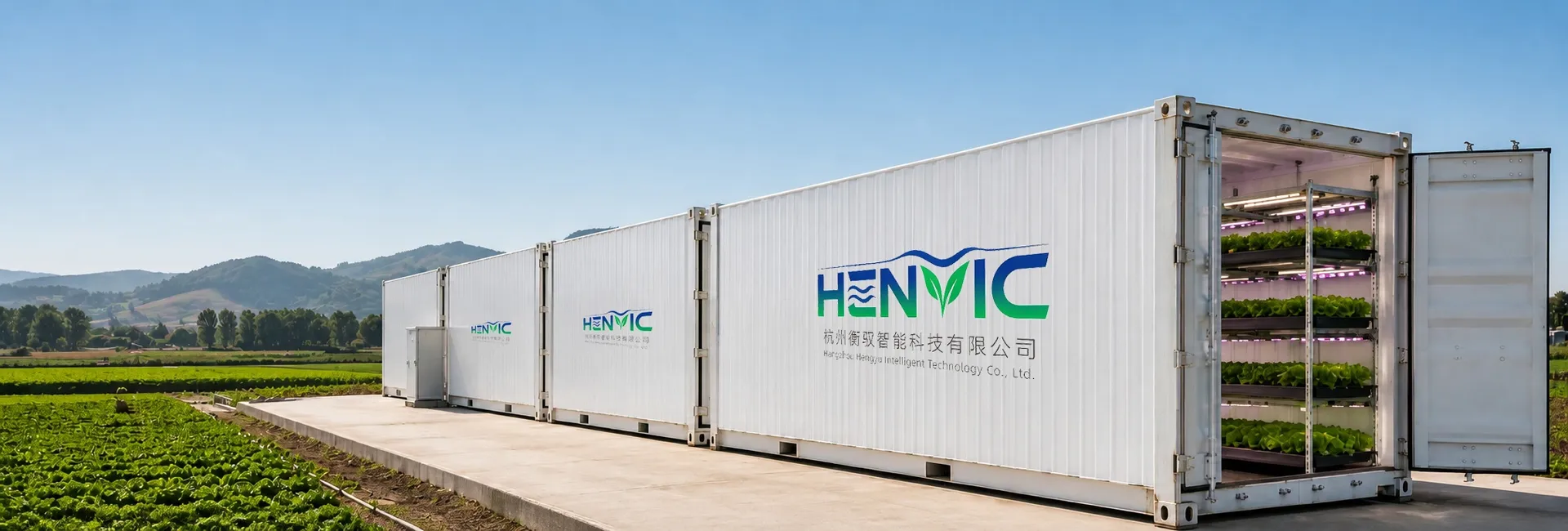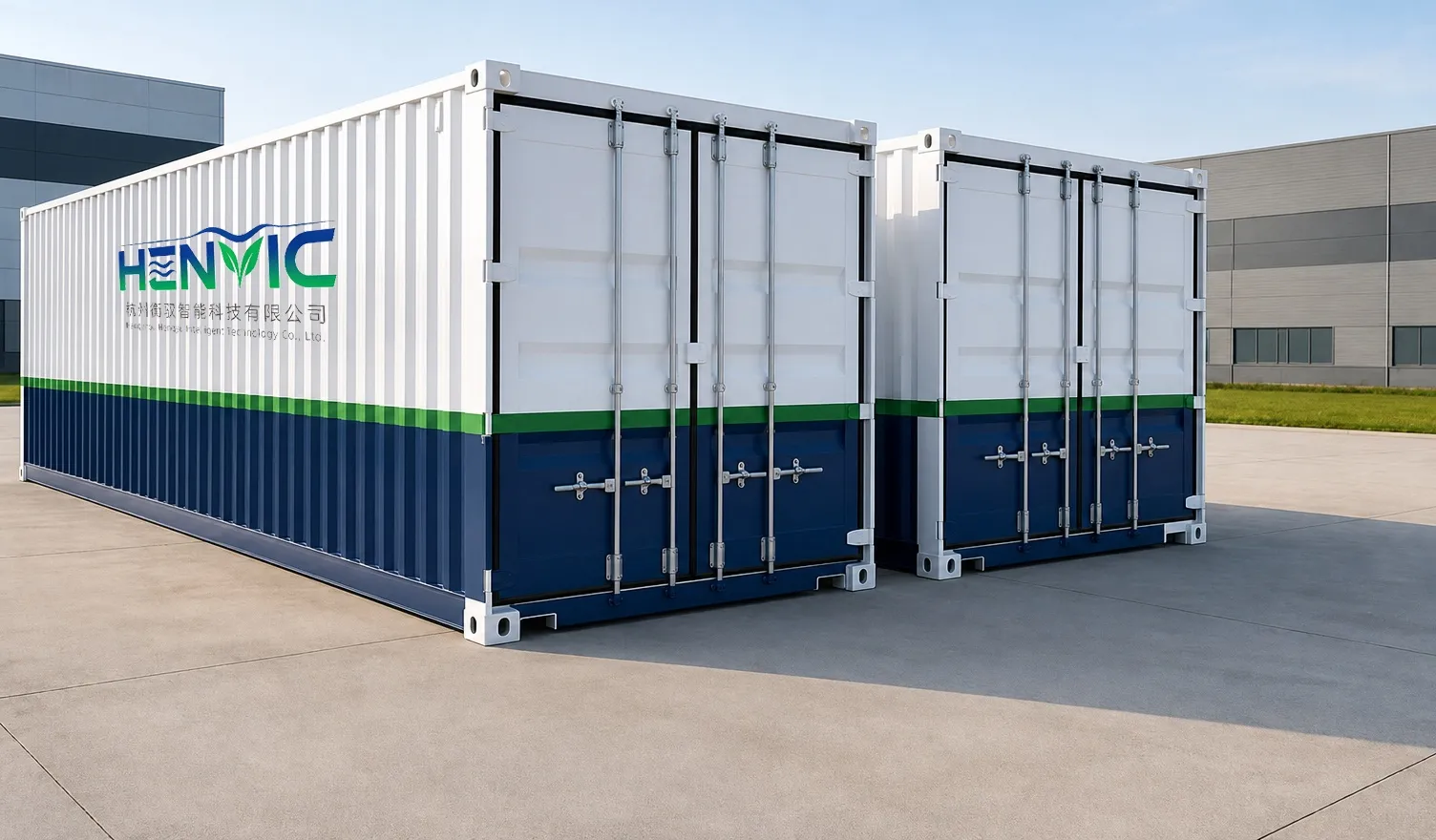
A container farm's defining departure from every previous form of agriculture is that it has no sun — and this is simultaneously its greatest freedom and its heaviest cost. In a field or a greenhouse, light arrives as a fixed package: a spectrum the crop did not choose, an intensity that depends on cloud cover and season, a photoperiod set by latitude and time of year. Inside a sealed box, all three become variables the grower sets. What was once weather becomes engineering. But the removal of the sun also removes the one input that agriculture has never had to pay for. Every photon delivered to a leaf in a container farm is purchased, and lighting is accordingly the single largest operating cost in most vertical farming systems — typically forty to sixty percent of electricity consumption, with the HVAC load that lighting itself creates adding substantially more. Spectrum formulation is therefore not a botanical refinement layered on top of an energy problem. It is the point where crop biology and the electricity meter meet directly.
Photons, not watts: the units that make the trade-off visible
The most common analytical error in this domain is to think in watts. The crop does not respond to energy; it responds to photons in a specific waveband. Photosynthetically active radiation (PAR) spans roughly 400 to 700 nanometres, and what matters biologically is how many photons within that band arrive per unit area per unit time — the photosynthetic photon flux density, or PPFD, measured in micromoles per square metre per second (µmol/m²/s). Accumulated over a photoperiod, this gives the daily light integral (DLI), measured in moles per square metre per day, which is the quantity most closely tied to yield. A luminaire's efficiency is properly expressed as photosynthetic photon efficacy — micromoles of PAR photons per joule of electrical energy consumed (µmol/J) — not as nominal wattage.
This distinction is not pedantic. Two fixtures drawing the same power can deliver very different photon counts, because the energy carried by a photon is inversely proportional to its wavelength. A red photon at 660 nm carries about 1.8 times the energy of a blue photon at 450 nm, so for the same radiant energy, red light delivers more photons. Since photosynthesis proceeds on a photon-count basis at these wavelengths, red photons are, in effect, cheaper — and this single physical fact sits underneath every spectral decision that follows.
The McCree curve and why "wavelength" is not a binary variable
The crop's spectral response is described by the McCree action spectrum, which plots photosynthetic quantum yield — the carbon fixed per photon absorbed — against wavelength. The curve has a broad maximum in the red region around 610–680 nm, a secondary peak in the blue around 430–460 nm, and a pronounced minimum in the green around 500–550 nm, where quantum yield is roughly half its red-region value. At first reading this seems to justify the practice common in early vertical farms: illuminate with nothing but red and blue, concentrate all input in the two efficient peaks, and discard the spectrally wasteful remainder.
That conclusion is wrong, and the reasons matter for both yield and quality.
The narrow-band trap: why red-and-blue formulation underperforms expectation
First, the Emerson enhancement effect. When far-red light (around 700–730 nm) and shorter-wavelength red light (around 650–680 nm) are supplied together, the photosynthetic rate exceeds the sum of the rates obtained when each is supplied alone. The mechanism lies in the two photosystems: red at 680 nm preferentially excites photosystem II, while far-red above 700 nm preferentially excites photosystem I, and balanced excitation of both photosystems produces a higher quantum yield than driving either alone. A spectrum with no far-red component therefore leaves measurable photosynthetic capacity unused — an efficiency loss that shows up as lower yield per mole of photons, the opposite of what the narrow-band strategy was meant to achieve.
Second, morphology. Red light alone produces elongated, thin, expanded leaves — the classic shade-avoidance response mediated by phytochrome, in which the plant interprets a red-dominant spectrum as signalling competition for light and invests in stem extension rather than compact growth. Blue light drives stomatal opening, chlorophyll formation, and compact, well-structured canopy architecture. The practical consequence is that a crop grown under a red-dominant spectrum tends toward sprawling, floppy growth that is difficult to manage in the confined tiers of a container and often more susceptible to mechanical damage in handling.
Third, secondary metabolism and appearance. The compounds that determine flavour, colour, and nutritional density — anthocyanins, carotenoids, phenolic compounds, ascorbate — respond to spectral cues that have little to do with photosynthetic efficiency. Ultraviolet and blue light are particularly influential in triggering the accumulation of protective secondary metabolites. A crop optimized purely for photon efficiency can therefore produce high biomass that tastes bland, looks pale, and carries a measurably poorer nutritional profile. For premium markets, where the product competes on quality rather than tonne per square metre, this is an economic failure even when the yield curve looks acceptable.
Fourth, penetration. Green light, though of low quantum yield at the leaf surface, is poorly absorbed by chlorophyll and thus penetrates deeper into the canopy and transmits through upper leaves. In a dense vertical planting, green photons reach lower leaves that red and blue cannot, so a modest green fraction can raise whole-canopy photosynthesis above what a leaf-level efficiency calculation would predict. The canopies of container farms, stacked tier upon tier at high planting density, are precisely where this effect is most relevant.
Where LED efficacy actually sits on the spectrum
Against the biological argument for full-spectrum formulation stands the physics of the diodes themselves, and the two do not align comfortably.
LED wall-plug efficiency varies markedly across the visible range. Deep-red emitters near 660 nm are the most efficient solid-state sources available, routinely exceeding 60 percent conversion efficiency in production devices, because the semiconductor material system is well matched to that emission energy. Blue emitters near 450 nm are also mature and efficient, though generally below the best red performance. Far-red emitters near 730 nm are considerably less efficient, and violet and ultraviolet emitters are worse still. Green emitters have historically been the weakest of all, because the material bandgap required for green emission is difficult to grow with high internal quantum efficiency — a problem long known in the industry as the "green gap."
The consequence is direct: the photons the plant most wants, and the photons that are cheapest to make, are not the same photons. Far-red, which biology says to include for Emerson enhancement, is energetically expensive to produce. Green, which biology says to include for canopy penetration, is the least efficient to generate. Red, which is the cheapest to generate and the most photosynthetically productive, is the one whose overuse distorts morphology. A spectrum formulation is therefore a negotiation between a quantum-yield curve that favours red, a morphology requirement that demands blue, a photosynthetic enhancement mechanism that wants far-red, and a semiconductor efficiency curve that penalizes exactly the wavelengths biology asks for.
The energy ledger beyond the luminaire
Even a spectrally optimal fixture leaves the system-level energy question open, and several factors push the true cost of delivered photons well above the nameplate efficacy.
Photoperiod versus intensity. The same DLI can be delivered by high intensity over a short period or lower intensity over a longer one. Crops generally saturate photosynthesis above a certain PPFD, so photons delivered beyond the saturation point are wasted as heat. Extending a moderate photoperiod therefore converts electricity to biomass more efficiently than driving intensity higher — up to the point of photoperiod limits imposed by crop physiology and the daily dark requirement. Choosing the photoperiod is as much an energy decision as a biological one.
The heat load the light creates. Not all electricity entering the luminaire becomes PAR photons; the remainder becomes heat, and even the PAR photons themselves are eventually dissipated as heat after absorption. In a sealed box, all of that energy must be removed by the cooling system, so the true energy cost of lighting is the luminaire's consumption plus the refrigeration power needed to remove the resulting heat. Improving luminaire efficacy reduces both terms, which is why high-efficacy LEDs repay their capital cost twice over — once in lighting energy and again in reduced cooling load.
Thermal derating and spectrum stability. Led efficacy and emission wavelength both shift with junction temperature. A fixture run hard and cooled poorly produces fewer photons, at slightly longer wavelengths, than the same fixture at design conditions, and it ages faster. Thermal management of the luminaire is therefore part of the spectral specification, not merely a reliability concern.
Dimming and scheduling. Because lighting is the dominant load and the crop's demand varies through its cycle, the ability to dim and to schedule is one of the highest-return controls available. Matching photon delivery to the crop's developmental stage — lower DLI during establishment, full DLI during rapid vegetative growth — avoids delivering expensive photons to a canopy that cannot use them. In tariff structures with time-of-use pricing, shifting lighting into off-peak hours reduces cost without changing the DLI delivered.
Formulating a spectrum as an optimization, not a recipe
The practical implication is that spectrum should be treated as a multi-objective optimization problem rather than a fixed recipe copied from a catalogue. The objectives are at least four: maximize photosynthetic productivity per photon, maintain a canopy architecture the space can accommodate, accumulate the secondary metabolites the target market values, and do all of it at the lowest achievable electrical cost per delivered photon.
These objectives do not all point the same direction, and the weighting among them depends on what the farm is selling. A producer supplying commodity leafy greens on a price-per-kilogram basis will weight photon efficiency and yield heavily, accept a modestly narrower spectrum, and tolerate a somewhat larger, looser canopy as long as handling remains workable. A producer supplying premium herbs or baby leaf to restaurants and specialty retail will weight morphology, colour, and flavour compounds more heavily, accept a lower µmol/J, and recover the cost in price rather than in volume. A propagator producing transplants for sale has yet another weighting, because canopy compactness and root-to-shoot ratio matter more than absolute biomass.
Because the response of crops to spectrum is species-specific and often cultivar-specific, the optimization cannot be done on paper alone. The relevant parameters — the red-to-blue ratio that produces the target morphology in a given cultivar, the far-red supplementation that yields a measurable photosynthetic gain, the total spectrum that best serves quality at an acceptable efficacy — must be established empirically for each crop the farm intends to grow, and the value of that empirical work is precisely that it cannot be substituted by a general recommendation.
The photon as the unit of both biology and economics
What makes container farming a genuinely different discipline from greenhouse horticulture is that the same physical quantity — the mole of PAR photons — is simultaneously the input to a biochemical process and the unit on the electricity bill. There is no free fraction, no sunlight subsidy, no seasonal dividend. Every improvement in the system is ultimately an improvement in the ratio between the light the crop uses and the light the farm pays for.
Seen this way, the trade-off between spectral formulation and energy consumption is not a tension to be resolved once and then forgotten. It is the recurring design problem of the entire enterprise. Spectrum determines whether the photons delivered are converted into biomass, into the morphology the space can support, and into the quality attributes the market will pay for. Efficacy determines what those photons cost. A farm that optimizes only one of the two — chasing the cheapest photons with a nutritionally and structurally compromised spectrum, or chasing a biologically ideal spectrum without regard to the electrical bill — will find its advantage erased by the other variable. The farms that work are those that treat the photon count as the common currency of both their agronomy and their accounts, and tune the spectrum until the two ledgers agree.