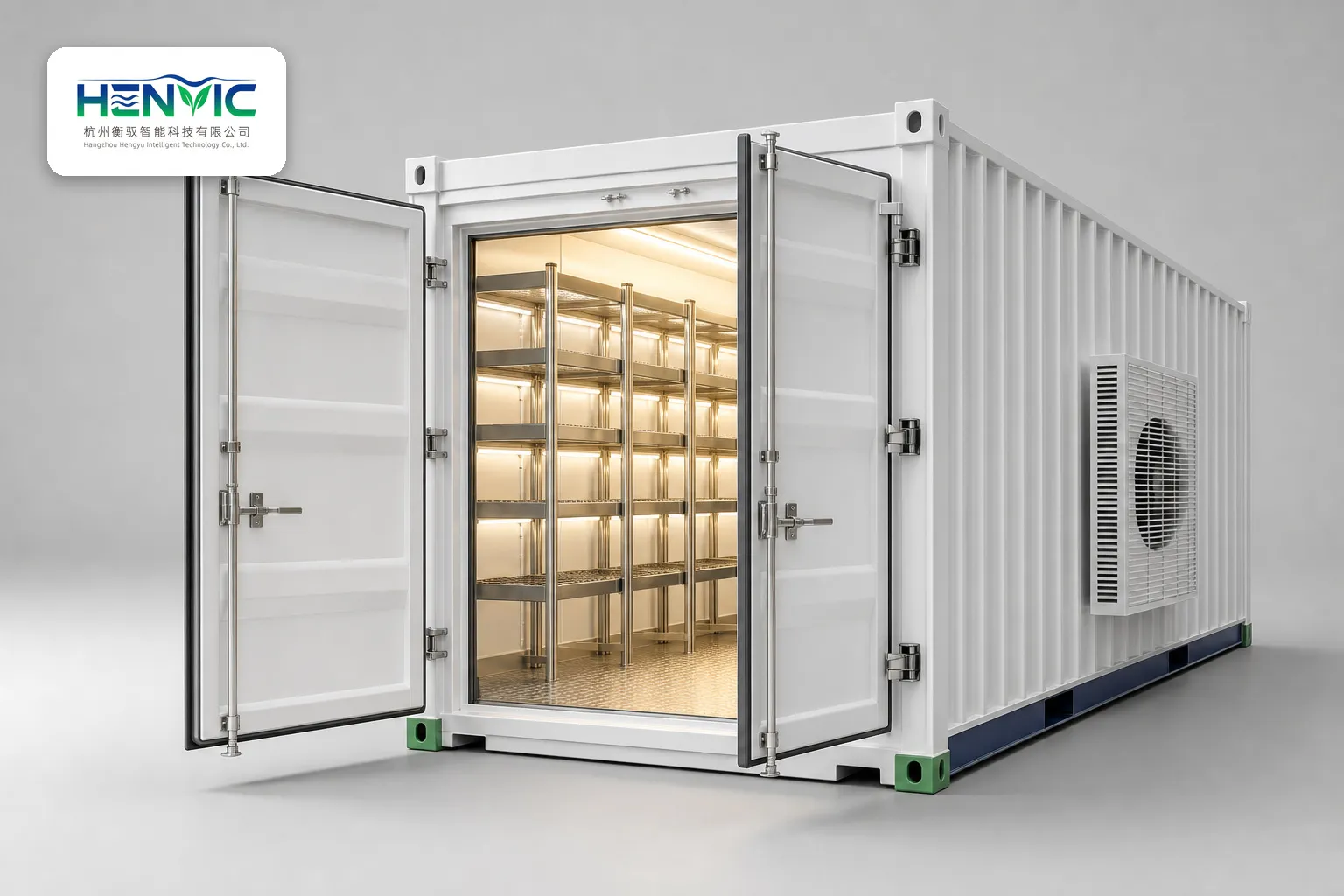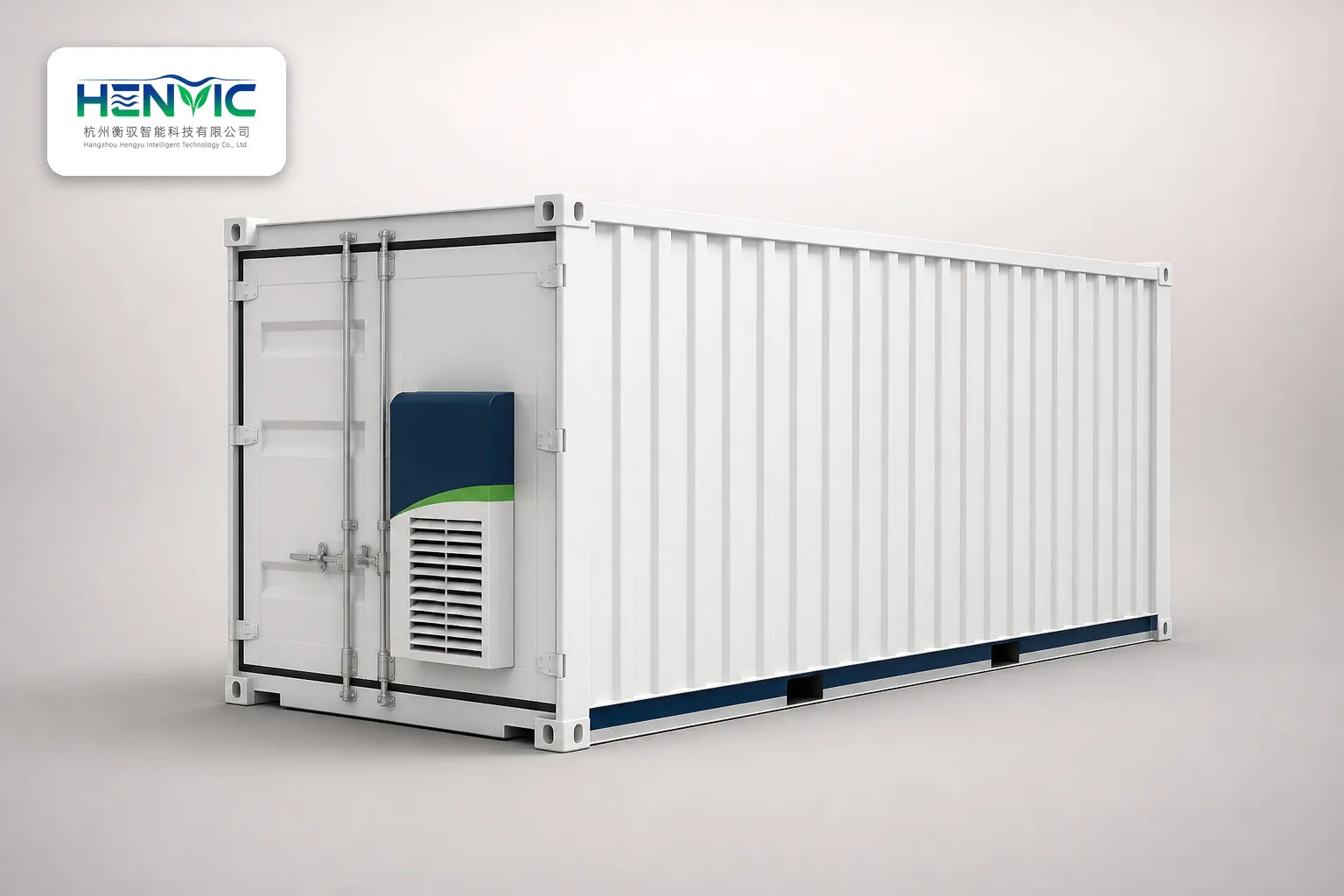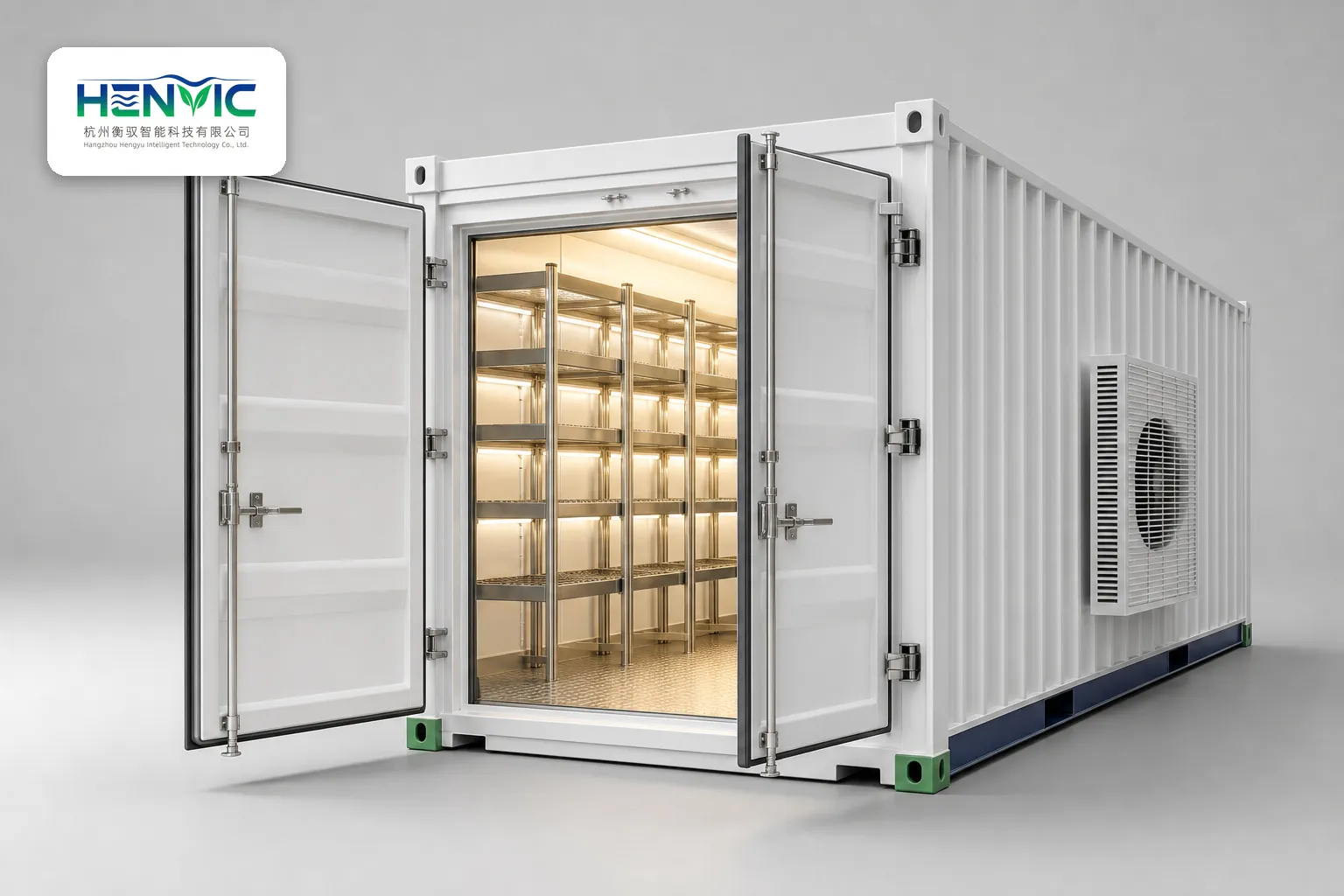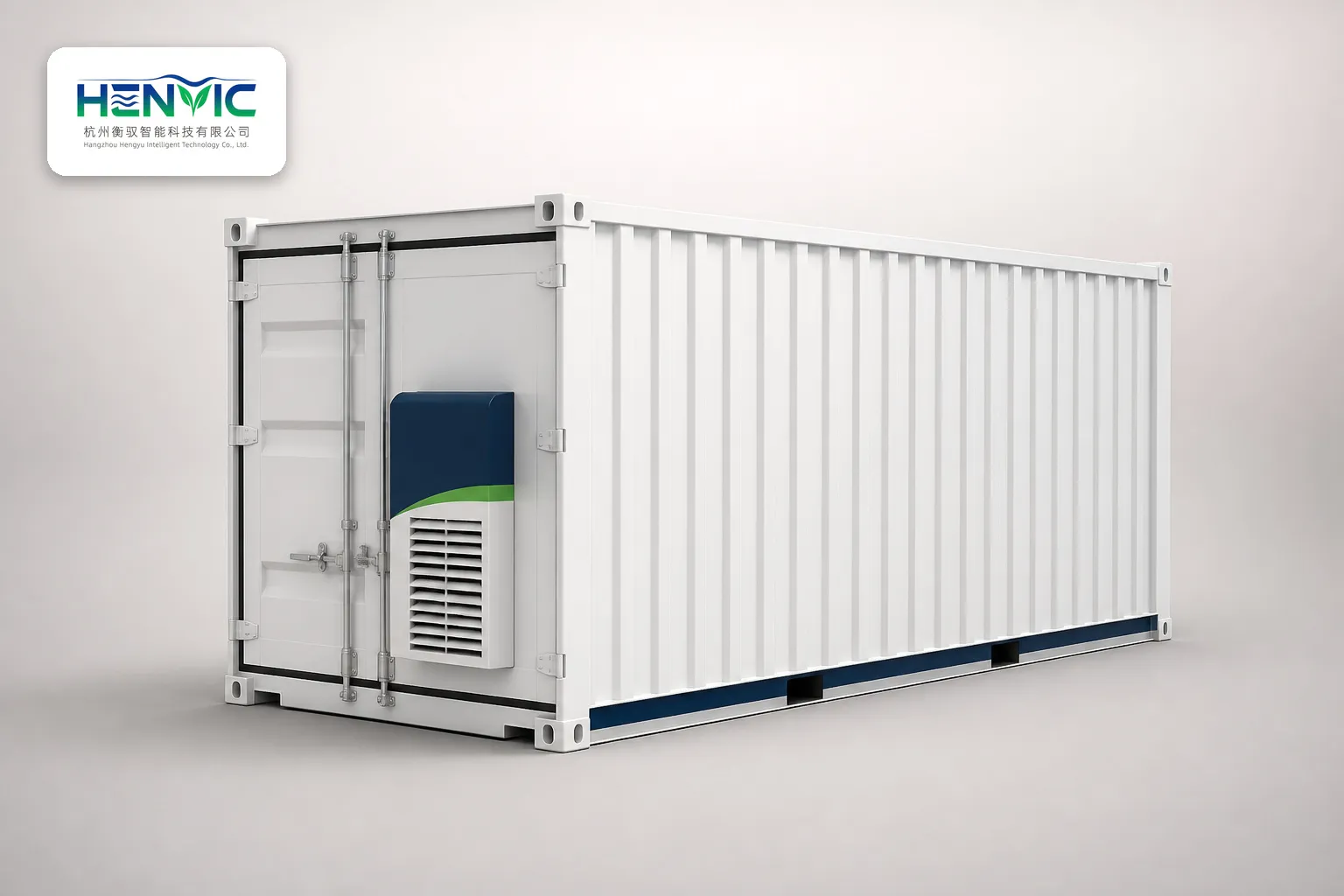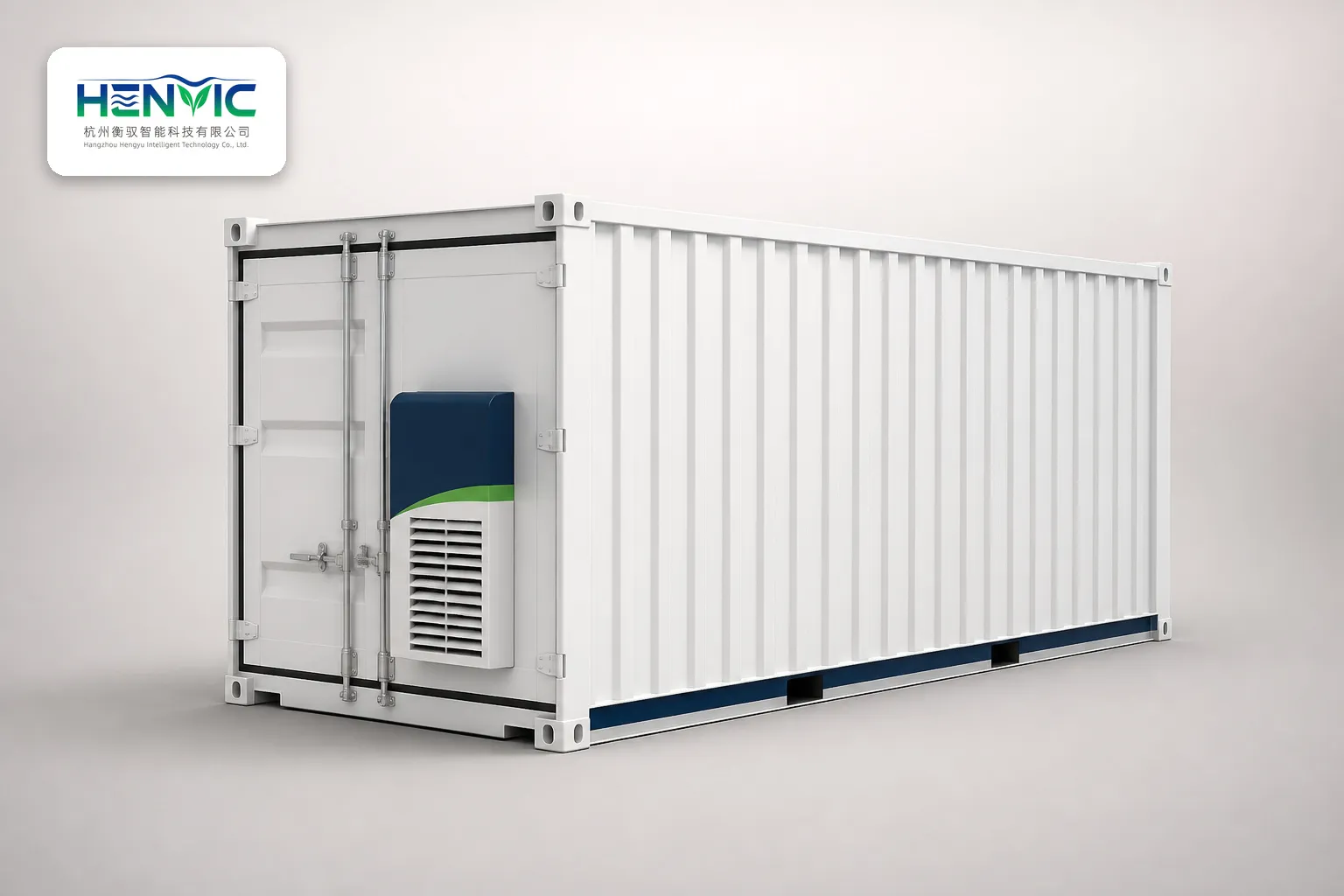
A plant cultivation container is a self-contained, transportable controlled-environment agriculture (CEA) system built inside an insulated intermodal box, in which light, temperature, humidity, carbon dioxide, airflow and nutrient delivery are all closed-loop regulated so that crops can be grown independently of outdoor climate, season or soil. Its technical significance is not that it grows plants — it is that it converts a weather-exposed, variable biological process into a repeatable industrial one, with yield and quality determined by setpoints and recipes rather than by rainfall and sunshine.
Structural Envelope and Thermal Design
The starting point is the conversion of a standard 20- or 40-foot steel container into a conditioned biological chamber. Corten steel is a poor thermal barrier, so the interior is lined with closed-cell polyurethane or polyisocyanurate panels, typically 50 to 100 millimetres thick, with a vapour barrier placed on the warm side to prevent interstitial condensation. Doors are upgraded to gasketed, insulated personnel access with a secondary airlock or vestibule in higher-specification units, because every door opening dumps a load of humid, unconditioned air into the chamber and is a common infection pathway.
The envelope must be treated as a pressure and contamination boundary as well as a thermal one. Growing rooms are usually held at slight positive pressure relative to the exterior, with filtered intake air, to keep spores and insects out. Floor drains, sealed cable and pipe penetrations, and non-absorbent, cleanable surfaces are standard, since the interior runs at high humidity and is periodically sanitised. Reflective interior linings — white film, mirror-finish aluminium or reflective laminate — are used to recover stray photons from the canopy and side walls, which matters because a container's narrow width puts a large fraction of the leaf area near a vertical boundary.
Lighting: The Dominant Energy Subsystem
LED arrays have entirely displaced high-pressure sodium in this application, and lighting is simultaneously the largest electrical load, the largest internal heat load and the single most important yield lever. Fixtures are mounted above each shelf tier in a multi-level rack, delivering photosynthetic photon flux density in the range of roughly 150 to 300 micromoles per square metre per second for leafy greens, with daily light integral targets commonly between 12 and 20 moles per square metre per day. Fruiting crops such as strawberry, dwarf tomato and pepper demand higher flux and, critically, a shift in spectral balance toward longer red and far-red wavelengths to drive flowering and fruit set.
Modern practice treats spectrum as a formulation variable rather than a fixed white output. Blue-rich light suppresses stem elongation and reinforces anthocyanin and secondary metabolite accumulation; red at 660 nanometres sits close to the chlorophyll absorption peak and drives photosynthetic efficiency; far-red around 730 nanometres can accelerate development through the Emerson enhancement effect and shade-avoidance signalling. Tunable fixtures with independently dimmable channels, combined with dawn-and-dusk ramping and intermittent darkness, allow the same container to be re-recipe for different crops. Efficacy, expressed in micromoles per joule, is the metric that most directly separates competitive systems from marginal ones, with current horticultural fixtures commonly exceeding two micromoles per joule.
Heat removal cannot be an afterthought. Nearly all electrical power delivered to the LEDs becomes heat inside the box, so the HVAC load is dominated by lighting rather than by ambient conditions. Fixture placement, driver location outside the growing volume, and airflow directly across the heat sinks are all part of the thermal design.
Climate Control: Temperature, Humidity and CO₂
Air handling in a container is a dehumidification problem first and a heating problem second. Plants transpire continuously, and in a sealed box with a high planting density that moisture has nowhere to go. Condensation on leaves is the primary trigger for botrytis and other foliar diseases, so the system must hold vapour pressure deficit within a target band — commonly 0.6 to 1.2 kilopascals for vegetative greens — by actively removing water. This is done with dedicated dehumidifiers, with the refrigeration cycle's latent capacity, or in advanced designs with desiccant or membrane-based systems that recover moisture rather than dumping it.
Temperature control typically targets 18 to 24 degrees Celsius with a modest day-night differential, since a negative or positive temperature integral influences stem strength, flowering and metabolite profiles. Heat pumps are now the default because they provide both heating and cooling from one machine and materially reduce coefficient-of-performance penalties versus resistive heat plus split air conditioning. Water temperature in the recirculating loop is separately controlled, often held near 18 to 22 degrees Celsius, because warm root-zone water both drops dissolved oxygen and favours pathogens such as pythium.
Carbon dioxide enrichment compensates for the fact that a sealed box quickly depletes the ambient 400 parts per million to limiting levels under strong light. Injection from compressed cylinders, liquid CO₂ or on-site generators is controlled to roughly 800 to 1200 parts per million during the photoperiod, with interlocks to prevent over-accumulation and to shut enrichment when doors open or when ventilation is commanded. CO₂ dosing only pays back if light, temperature and airflow are simultaneously raised to keep stomata open — it is a system-level lever, not an isolated upgrade.
Airflow distribution deserves as much design attention as the equipment itself. Horizontal airflow devices sweep the boundary layer off leaf surfaces, equalise temperature and CO₂ concentration between tiers, and strengthen tissue. Poorly designed flow leaves dead zones behind shelving uprights, producing micro-climates where humidity spikes and crops fail unevenly. Computational fluid dynamics modelling is increasingly used at the design stage for exactly this reason.
Root-Zone Delivery: Hydroponic and Aeroponic Systems
Three nutrient strategies dominate. Nutrient film technique runs a thin recirculating film through shallow channels, giving excellent oxygen exposure but leaving plants vulnerable within hours of a pump failure. Deep water culture suspends roots in oxygenated solution, offering high thermal buffering and forgiving operation at the cost of oxygen-transfer demand. Aeroponics mists exposed roots with fine droplets, maximising both oxygen and water-use efficiency while introducing nozzle-clogging and biofilm risks that require filtration and sanitisation discipline. Substrate-based systems using rockwool, coco or peat plugs are also common in containers because they buffer errors and suit seedling-to-harvest trays.
The nutrient solution itself is a controlled chemical system. Electrical conductivity, typically 0.8 to 1.8 millisiemens per centimetre depending on crop and growth stage, is regulated by dosing concentrate; pH, usually held between 5.5 and 6.5, is corrected with acid dosing to keep micronutrients available. Peristaltic or diaphragm dosing pumps, an inline EC and pH probe pair, and a reservoir with level sensing form the standard loop. Because a container's total solution volume is small, a single dosing error propagates fast, so redundant sensing, alarm limits and software interlocks on maximum dose volume are essential rather than optional.
Disinfection of the recirculating stream — ultraviolet in-line reactors, ozone dosing, slow sand or membrane filtration — is what allows multi-cycle operation without pathogen build-up. Water recovery and reuse, including condensation capture from the dehumidification loop, closes part of the resource story and is one of the system's genuine advantages: container farms commonly use on the order of 90 to 95 percent less water than field production.
Sensing, Control and Automation
The container's nervous system is a programmable logic controller or industrial gateway reading arrays of sensors — air and water temperature, relative humidity, CO₂, PAR, EC, pH, dissolved oxygen, liquid level, and increasingly leaf-level temperature from infrared arrays. Control loops range from simple setpoint regulation to model-based strategies that predict condensation risk from the temperature and humidity trajectory, or that optimise the daily light integral against tariff-driven electricity pricing by shifting photoperiod into low-cost hours.
Remote telemetry is effectively mandatory in commercial deployment, since a container is frequently unmanned. Cloud dashboards, alarm escalation, and watchdog behaviour that fails the system into a safe state on communication loss are standard. The next layer is automation of the crop itself: seedling trays, transplant stations, harvest carts sized to the container's narrow footprint, and vision-based canopy assessment. Robotic handling inside a two-and-a-half-metre-wide box is a real mechanical constraint, and much of the design effort goes into making racks and aisles compatible with human-scale workflow rather than into full automation.
Growing recipes — the packaged combination of spectrum, photoperiod, temperature integral, VPD band, CO₂ level and nutrient programme — are the actual intellectual property of the industry. Reproducible recipes are what let an operator in one city replicate the yield and taste profile achieved somewhere else.
Energy, Economics and Deployment Scenarios
Energy intensity is the central economic constraint. A well-designed 20-foot leafy-green container commonly draws on the order of 10 to 30 kilowatt-hours per day depending on tier count, photoperiod and climate, with lighting and dehumidification dominating. Grid parity, on-site photovoltaics with battery storage, and thermal recovery from condenser heat are all used to cut operating cost; coupling the waste heat to a second container or to water pre-heating is a simple and effective efficiency measure.
Yield is expressed per unit of footprint rather than per unit of land. Vertical stacking multiplies the effective planting area several-fold relative to the floor footprint, and a leafy-green container can harvest continuously on a short crop cycle, which is what makes the economics work at all. The honest limitation is that revenue per box is capped by crop price and by the fact that a container is best suited to high-value, fast-cycle, compact crops — lettuce, herbs, microgreens, baby leaf, strawberries, and nursery or tissue-culture propagation. Calorie crops are not viable in this format.
Deployment scenarios follow from portability and autonomy. Urban and peri-urban restaurants, grocers and food-hall operators use them for hyper-local production with same-day harvest. Remote, arctic, island and military installations value the ability to produce fresh greens where supply chains are long, expensive or unreliable. Disaster response and refugee operations use them as deployable nutrition assets. Research institutions use them as precisely controllable phenotyping and climate-change platforms. And in some jurisdictions they serve as licensed indoor production units where climate and water scarcity make field agriculture difficult.
Challenges and Technical Direction
The failure modes are consistent and instructive. A single component fault — a pump, a dehumidifier, a controller — can destroy a full canopy within hours, so redundancy and alarm discipline matter more than peak performance. Condensation-driven disease remains the most common quality problem. Capital cost per kilogram of produce is high relative to field or greenhouse production, so containers compete on freshness, traceability, zero pesticide use, water savings and location rather than on price. Crop mix is narrow, and labour access inside a confined box limits scale-up economics.
Technical progress is moving along several fronts: higher-efficacy and tunable spectrum fixtures, heat-pump and desiccant dehumidification with energy recovery, model-predictive and reinforcement-learning climate control, edge sensing for early stress detection from canopy temperature and fluorescence, and modular multi-container clusters that share chilled water, CO₂ and nutrient infrastructure to reach genuine scale. Standardisation of growing recipes and of data interfaces is quietly becoming as important as hardware improvement.
A plant cultivation container is therefore best understood not as a farm in a box but as a process-engineering problem in a box: a small, sealed, strongly coupled thermodynamic and biological system where every subsystem's output is another subsystem's input. Its reliability depends less on any single component than on the integration discipline that keeps light, heat, moisture, carbon and nutrients in balance cycle after cycle.