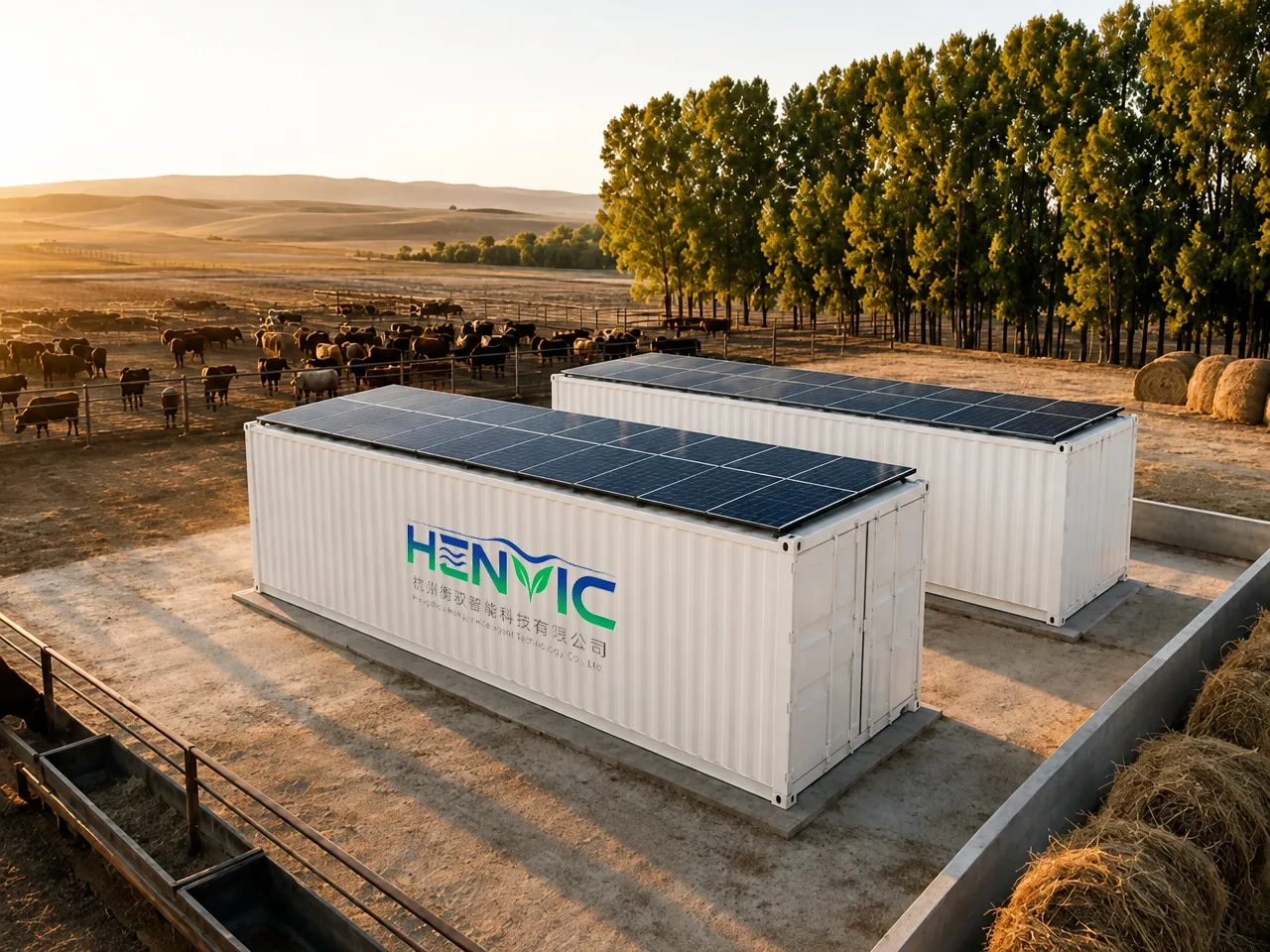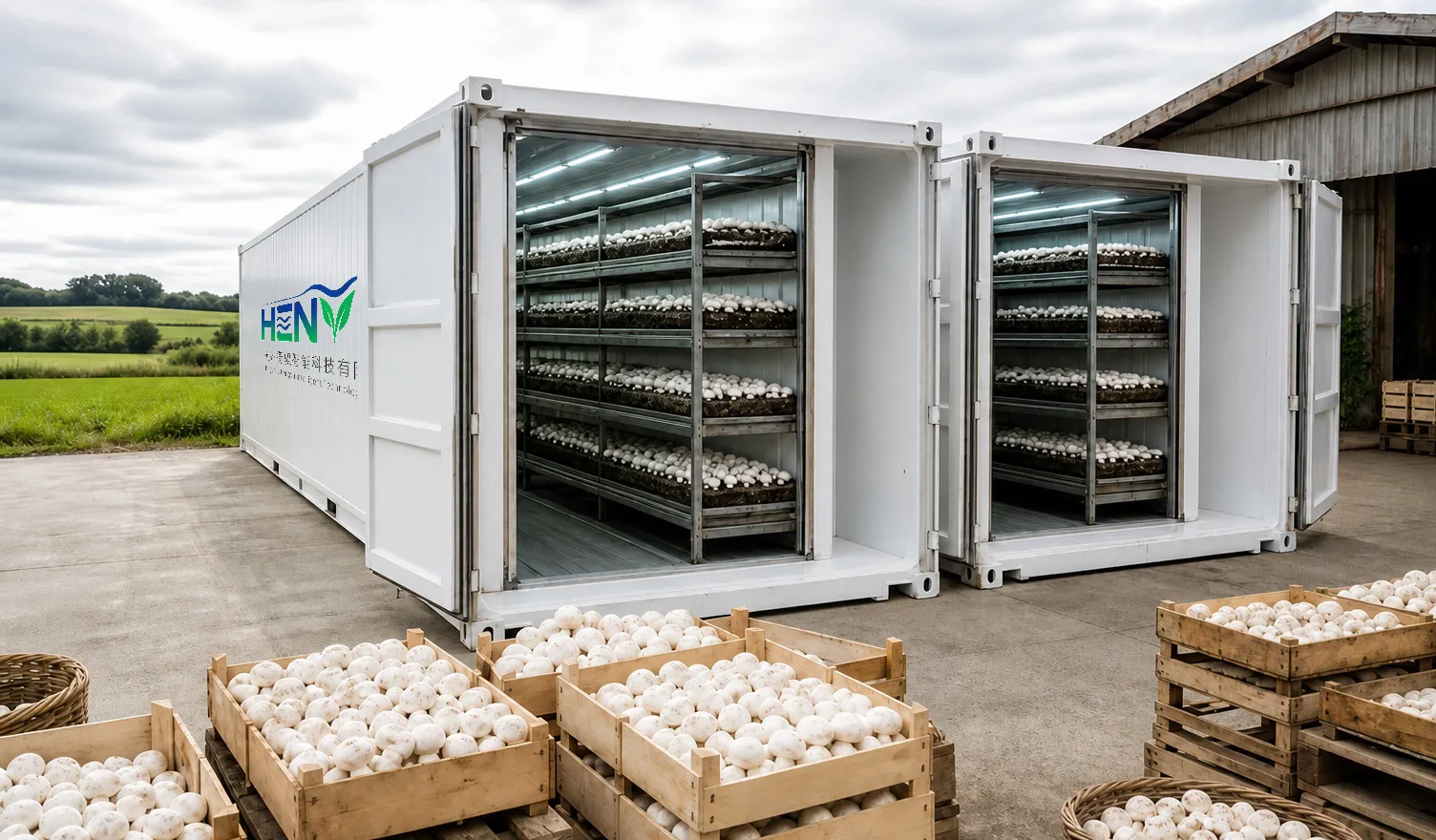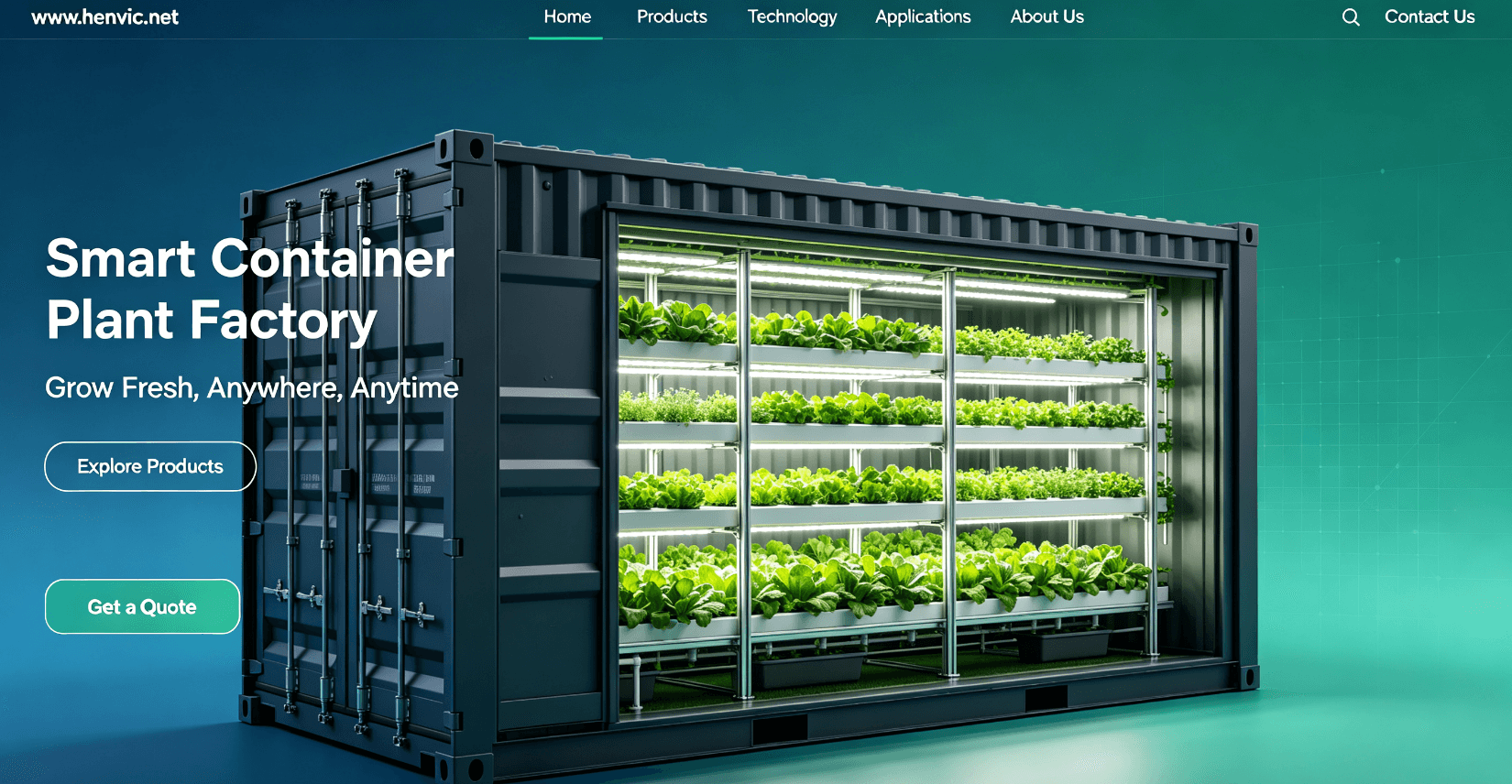
The defining difference between a container farm and a greenhouse is not the lighting or the racks; it is that the container is a sealed volume. Air does not exchange freely with the outdoors, and the same property that allows tight environmental control also converts trace gases into persistent, self-reinforcing problems. The gases that matter most — CO₂, ethylene, and water vapour — are all produced by the crop itself, and none can be managed by the mechanisms that work in a naturally ventilated structure.
CO₂ depletion is the most consequential and least monitored gas-phase effect. Photosynthesis draws CO₂ from the air immediately surrounding the leaf, and in a still boundary layer that CO₂ is replenished only by diffusion. In a sealed container without supplemental CO₂, the canopy can deplete intercellular and boundary-layer CO₂ to within tens of parts per million of the compensation point within one to two hours of lights-on. At the compensation point, gross photosynthetic rate equals respiration and net assimilation ceases regardless of light delivered. The room-level reading, taken at height or in the aisle, still registers 400–450 ppm and gives no indication the canopy itself is starved.
Supplemental CO₂ resolves this directly and is among the highest-return interventions available in a container farm, because it removes a limitation lighting investment alone cannot overcome. Enrichment to 800–1,200 ppm improves net assimilation in most leafy species, with the response flattening above roughly 1,200–1,500 ppm and marginal benefit diminishing. The engineering questions are the same as for any gas: how it is delivered, where it is measured, and how losses are controlled.
Injection into general room air is inefficient. The gas must reach the canopy — through the same ducting supplying air at each tier, or via localised injection at rack level — so concentration at the leaf surface rises, not just concentration at the ceiling. Measurement should be at canopy height, in the air stream returning from the canopy, not at a wall-mounted sensor. Because the container is not perfectly sealed, some enrichment escapes through door openings, penetrations, and the make-up air path; enrichment is maintained against a continuous leak rate, and cost is proportional to that leak rate, which is reason enough to minimise it.
Ethylene accumulation is the mirror-image problem: a gas the crop produces that harms the crop. Ethylene is generated by plant tissue, and production increases with wounding, senescence, and stress. In a sealed container it has nowhere to go. Concentrations accumulated over a production cycle can reach levels — depending on species and sensitivity — sufficient to trigger premature senescence, leaf abscission, and reduced post-harvest shelf life.
Species sensitivity spans orders of magnitude. Lettuce and many greens are relatively insensitive; tomatoes, peppers, and many fruiting crops respond at low parts per billion; and ethylene from senescing lower leaves is part of the total load. In a greens-only container, ethylene is a secondary concern usually managed by periodic ventilation. In a container producing fruiting crops, or one holding harvested product inside the envelope, ethylene management becomes a primary design requirement.
The options are removal or ventilation. Ventilation with outside air resolves ethylene but discards controlled CO₂ enrichment and the conditioning already paid for, and it reintroduces outdoor climate and contaminants. Removal by adsorption — potassium permanganate or catalytic oxidation — preserves the sealed environment at the cost of a consumable. For container farms the choice generally depends on whether the crop is sensitive enough to justify removal, and the decision is easier to make when ethylene is monitored rather than assumed.
Water vapour is the gas-phase parameter with the most direct morphological consequence. Transpiration is driven by the vapour pressure deficit between the leaf interior, saturated at leaf temperature, and the surrounding air. VPD, not relative humidity, is the correct control variable, because it captures both humidity and temperature: the same relative humidity at two temperatures represents two different VPDs and two different transpiration rates. In a container farm the air warmed by lighting and canopy holds more moisture, so top-tier VPD can differ from bottom-tier VPD enough to change transpiration substantially.
Low VPD reduces transpiration, which reduces calcium and boron delivery to growing tips, since both move with the transpiration stream and are immobile in the phloem. The result is tip burn and marginal necrosis in fast-growing leafy crops even when the nutrient solution is correct. High VPD, conversely, drives excessive transpiration and water stress. The operating window is narrower for some species than others, and for leafy greens a mid-day VPD of 0.8–1.2 kPa is a common target, adjusted by species and growth stage.
The difficulty is that VPD control is coupled to temperature control, humidity control, and CO₂ enrichment, and the couplings run in conflicting directions. Raising temperature to raise VPD also raises cooling load; dehumidifying to lower humidity also increases cooling and interacts with enrichment; and CO₂ enrichment raises plant water-use efficiency, reducing the transpiration that generates the humidity in the first place. The controller must hold all three variables at once, which is why a container farm's environmental controller is not a thermostat but a multi-variable control problem, and why it deserves the same commissioning rigor as the mechanical systems.
Odour and volatile organic compounds are a minor but real consideration. Plants emit a range of biogenic VOCs, and both worker safety and equipment longevity benefit from attention to air quality in the envelope. The practical issues are filter loading, seal compatibility, and accelerated sensor drift: electrochemical gas sensors degrade faster under VOC exposure. Designers should not specify CO₂ or ethylene sensors without accounting for the volatile background they will operate in, and ventilation or filtration belongs in the design from the outset rather than added when odour becomes noticeable.
The gas-phase specification. What should be written into the design: a CO₂ enrichment target at canopy level with delivery method and measurement point; a maximum tolerable ethylene concentration by crop sensitivity, with removal or ventilation method; a VPD set point trajectory by growth stage, with the temperature and humidity combinations that achieve it; an air exchange rate for ventilation expressed as a fraction of container volume per hour, with its associated energy and CO₂ loss; and the leak rate the sealing design is intended to achieve, since that number determines the operating cost of enrichment. None of these are exotic. They are simply the ones left out when the container is treated as a small greenhouse.