1. Why Fungi Fit the Cabin Model Better Than Any Other Crop
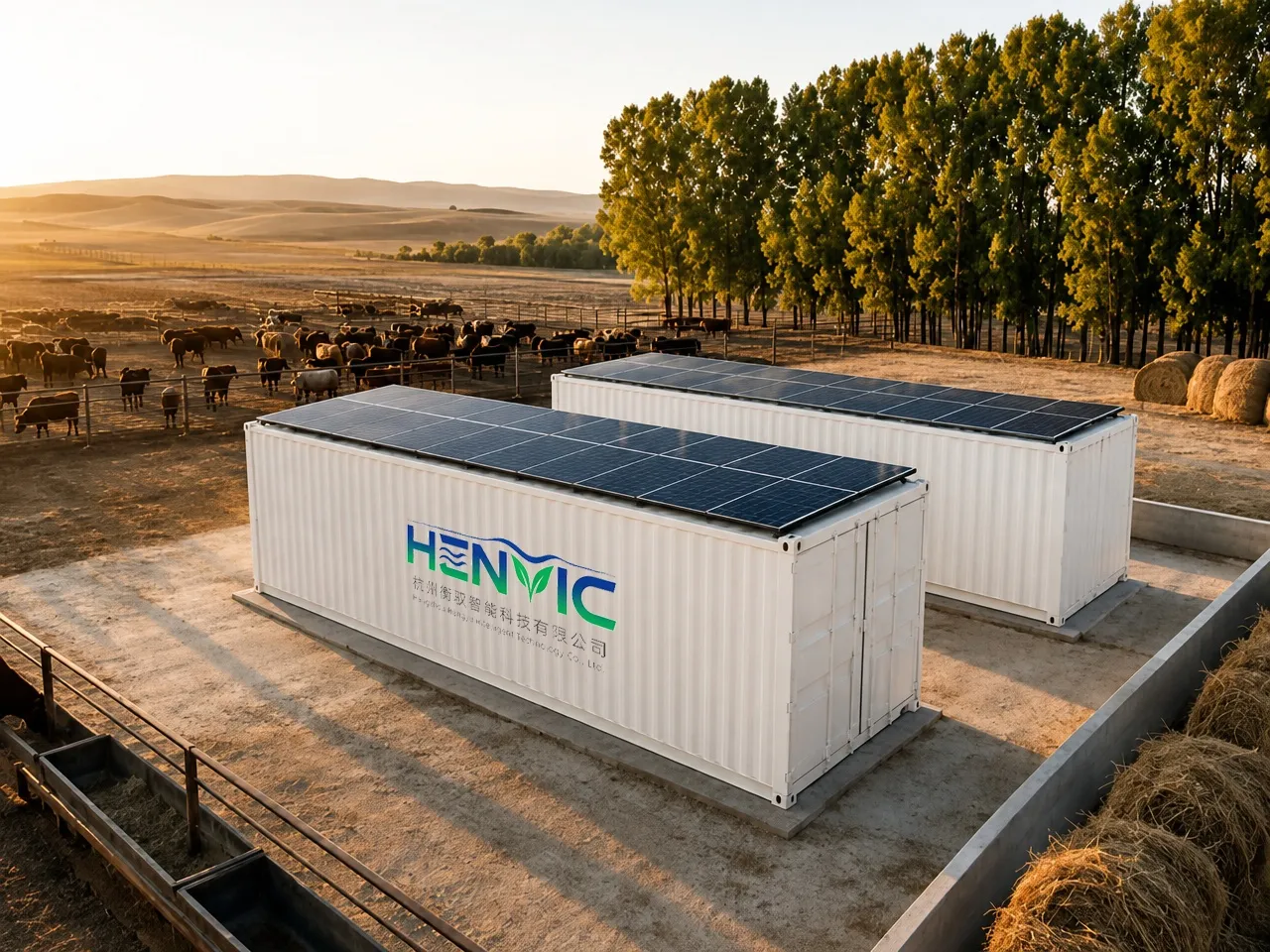
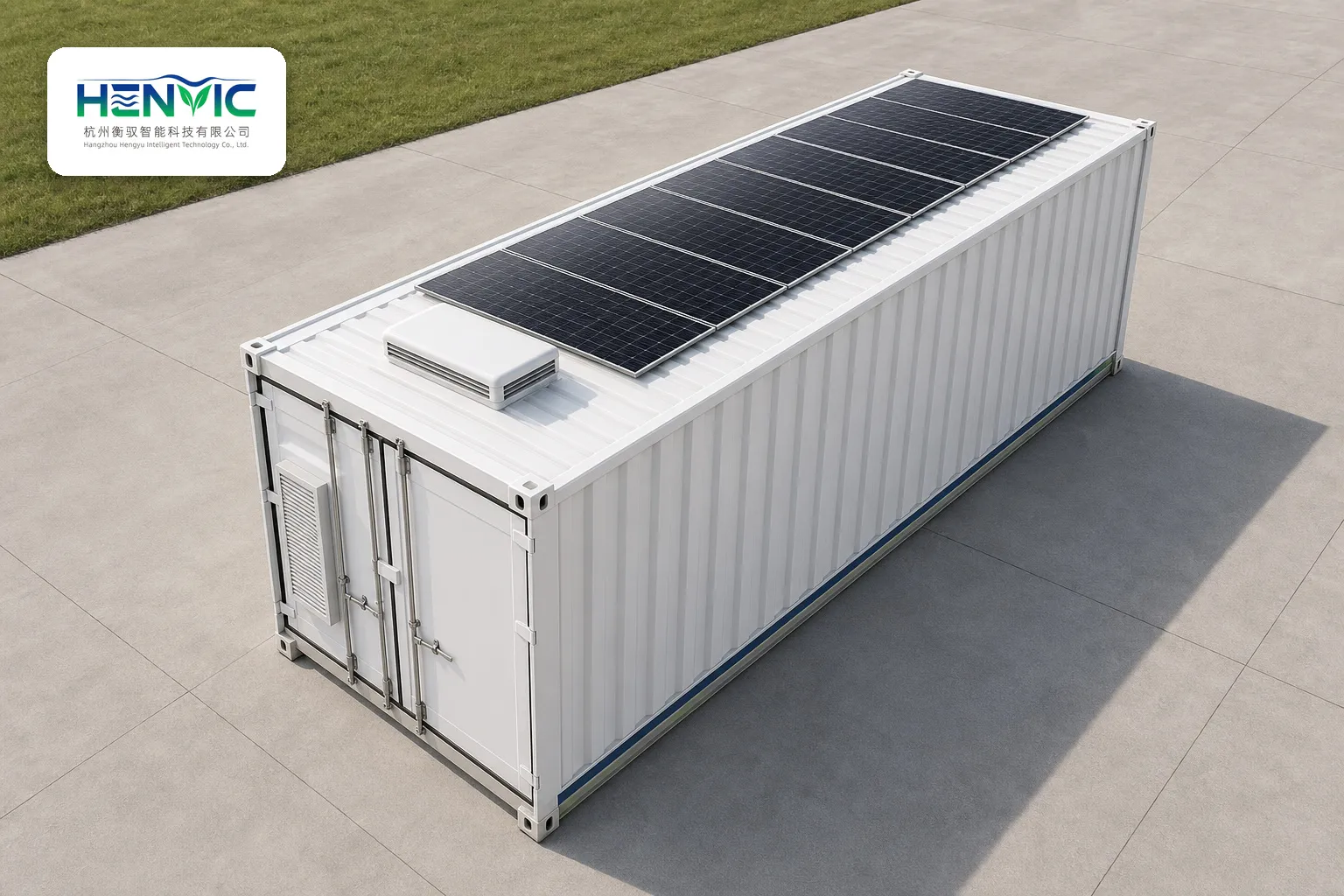
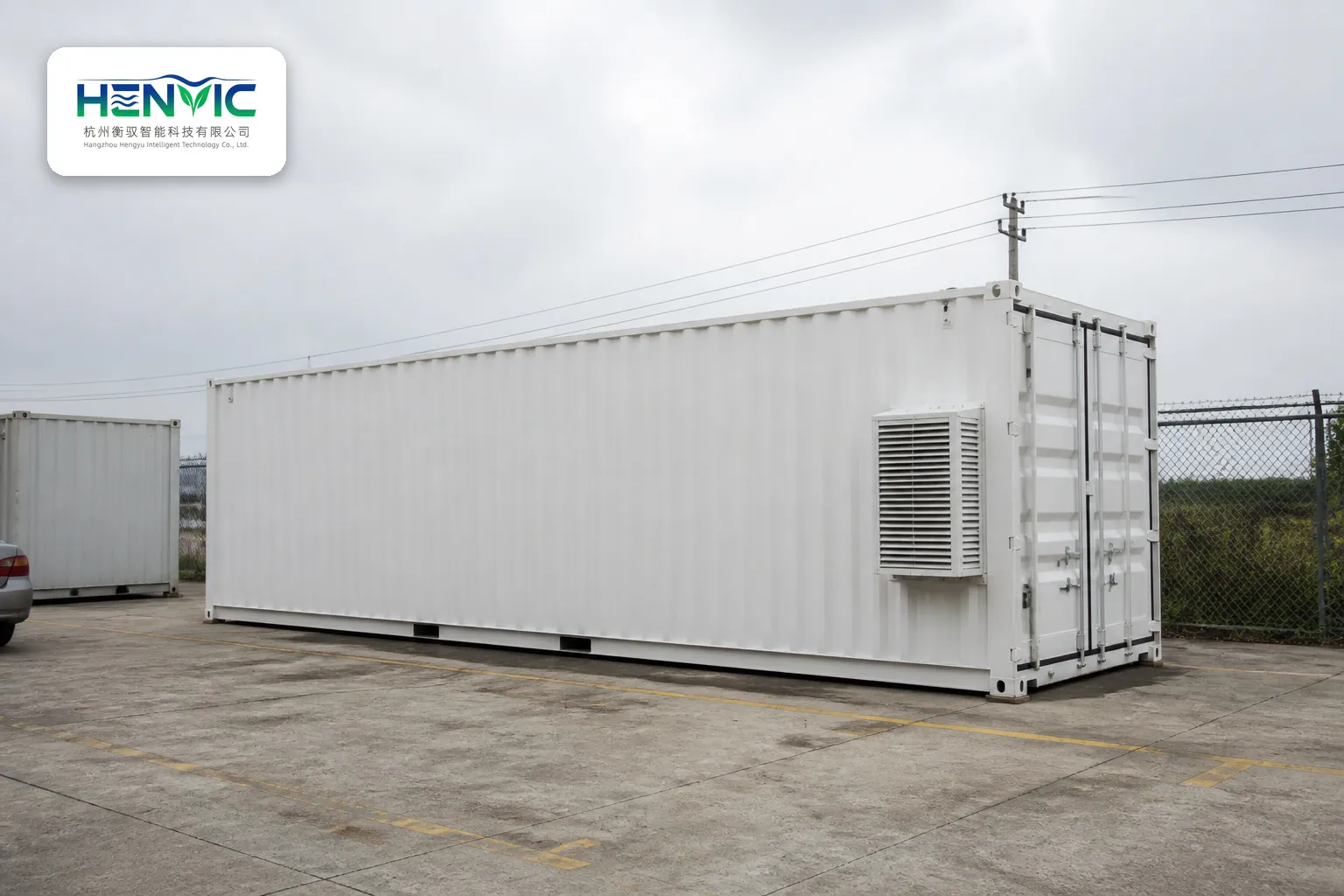
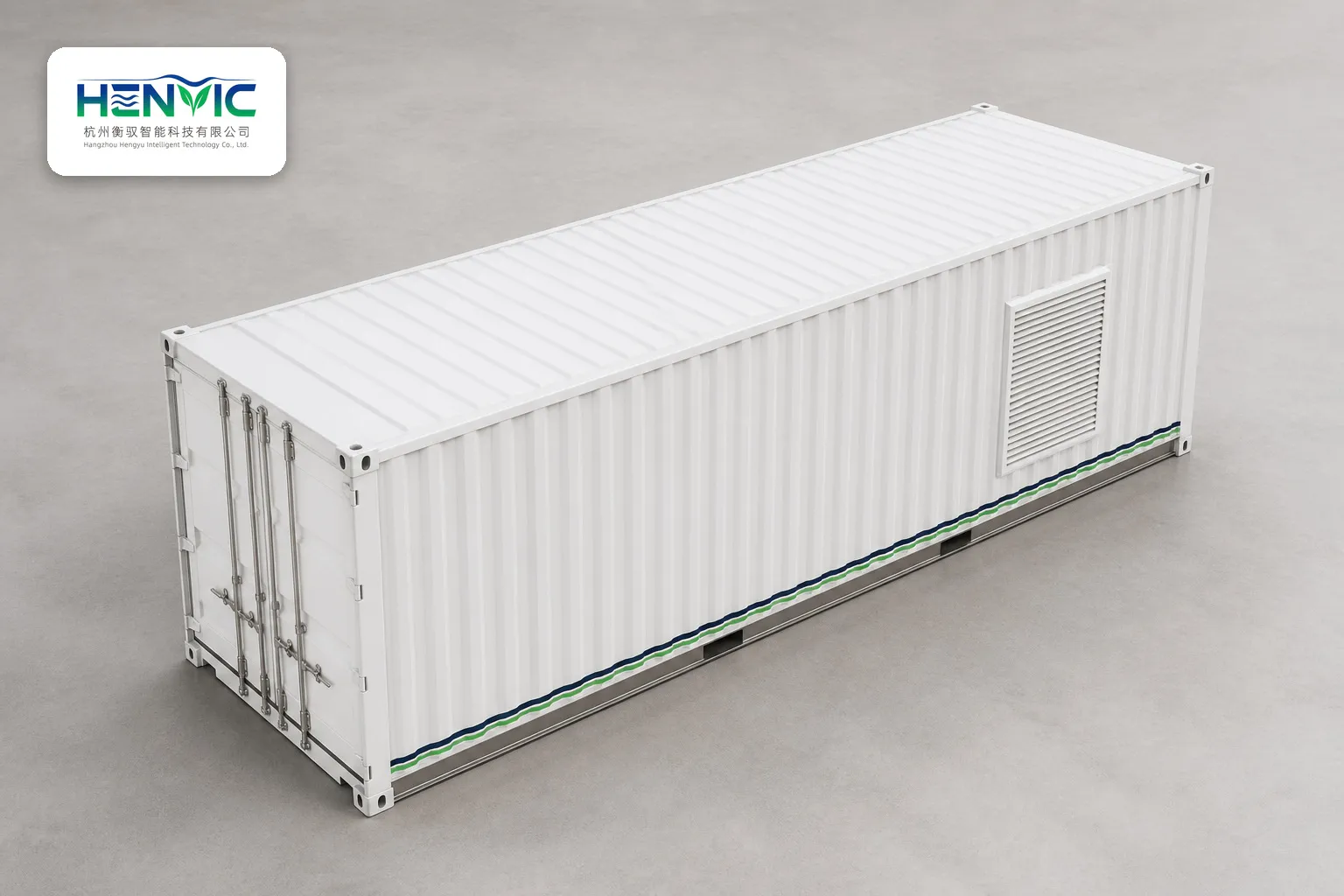
A mushroom cultivation cabin is a sealed, insulated, instrumented enclosure in which the fruiting environment — temperature, relative humidity, carbon dioxide, fresh-air exchange, air movement and substrate condition — is generated internally and held by closed-loop control rather than by season, climate or operator judgement.
Fungi are the ideal client for such a system, for one economic reason and one biological one.
The economic reason is that mushrooms are heterotrophs. They build biomass from pre-digested substrate and need no photosynthetic photon flux at all. The single largest operational cost in every leafy-green container — the LED array, plus the cooling required to reject the heat it generates — simply disappears. A mushroom cabin's energy load is dominated by refrigeration, humidification and air handling, all of which are cheaper per unit of harvest than photon delivery.
The biological reason is that fungal fruiting is governed by a small number of variables that respond within hours rather than weeks. Carbon dioxide concentration, humidity, temperature differential and air movement between them determine whether mycelium continues to run, whether primordia form, whether they abort, and whether the resulting fruiting bodies are well-formed. All four are cheap to measure in situ and fast to correct. That tight feedback loop is exactly what automation monetises.
The cabin does not make an undomesticated strain fruit. What it does is convert a biological capability that exists in a laboratory into a repeatable industrial process — schedulable, traceable and independent of geography.
2. Fungal Physiology as a Control Specification
Design decisions in a mushroom cabin follow directly from physiology, and it is worth setting out the four governing relationships before discussing hardware.
Carbon dioxide is the master lever. This is the defining feature of mushroom cultivation and the reason a cabin cannot be designed like a grow room with the lights removed. Vegetative mycelium tolerates and in many species prefers elevated CO₂ in the thousands of ppm range; it colonises substrate efficiently under such conditions. Primordia induction, by contrast, generally requires a sharp and substantial reduction — often to the low hundreds or a few hundred ppm — and stipe elongation versus cap expansion is itself CO₂-modulated, with higher CO₂ suppressing cap development and producing long-stemmed, small-capped morphology. Switching between these regimes is the cultivation protocol. A cabin's CO₂ control authority and its regulator responsiveness are therefore the primary specification, ahead of temperature accuracy.
Humidity must be high and non-condensing. Fruiting bodies are roughly 90 % water. At the primordia stage, surface drying causes aborting — the pin dies and the block yields nothing from that site. But free water standing on caps causes bacterial blotch and promotes competitor moulds. The operating target is typically 85–95 % RH held without dripping, which in practice means controlling a dew point rather than an RH reading, and managing surface condensation as a first-class design problem: cold spots, jets, and uninsulated metal all produce dripping that a sensor will not report.
Temperature governs metabolism and triggers induction. Species optima range broadly, and many require a thermal shock or a day/night differential to switch from vegetative growth to fruiting. Control must therefore support programmed ramps and differentials, not just a fixed set-point.
Air movement must remove CO₂ without drafting. This is the subtlest requirement and the one most often got wrong. Ventilation must exchange enough air to hold CO₂ at the target and equalise humidity, but direct airflow on the substrate deforms caps, desiccates primordia and spreads spores — thereby spreading contamination. Serious cabins therefore engineer low-velocity, non-directed "draft-free" distribution, treating the interior as a flow-field problem and measuring spatial uniformity rather than quoting fan capacity.
3. System Architecture
Envelope. Insulated panels with managed thermal bridging, sealed against dust and spores, with a separate material airlock and personnel flow control. Sealing is biosecurity as much as energy control: it keeps Trichoderma and competitor mould spores out and keeps the conditioned regime in. Internal surfaces must tolerate permanent high humidity and repeated sanitiser exposure; floors must drain completely and corners must be cleanable. Internal volumes in current deployments reach roughly 600 m³ per cabin, which raises stocking density and improves per-cabin economics but makes airflow engineering considerably harder.
Thermal and psychrometric plant. Air-source heat pumps provide both heating and dehumidifying cooling from one machine, with ultra-low-ambient units rated to −45 °C extending deployment into severe cold. Dedicated humidification — ultrasonic or high-pressure micro-fog, with surface sprinkling where the species requires it — supplies latent moisture. Because a cabin is a single-crop batch process, redundancy is becoming standard: large installations now specify two independent environmental-control units per cabin so that one failure does not collapse a crop.
Air distribution and gas management. Fresh-air intake, return, exhaust and internal recirculation must be designed for spatial uniformity of temperature, humidity and CO₂ across every rack level, with no dead zones and no directed jet on the substrate. Measured tier-to-tier uniformity is the metric that separates a genuine cabin from a shed with a controller bolted on.
Racking and substrate handling. Multi-tier rolling racks holding blocks or bottles, with extraction clearance for harvest and cleaning, plus separate phases for the same cabin where the species allows it. Some installations separate incubation from fruiting spatially; others sequence both within one cabin by recipe.
Instrumentation and edge control. Dense sampling of air temperature, humidity, dew point, CO₂ and air velocity at multiple points and heights, with solution or substrate moisture where relevant. The edge controller executes staged recipes — set-points, ramps, dwell times, differential thresholds, alarm and interlock logic — and logs every batch.
Software layer. Two functions are routinely conflated. Recipe execution digitises a species' environmental profile and replays it automatically by stage. Cluster supervision treats dozens of cabins as one schedulable factory, with digital-twin visualisation of every parameter and control action for yield and energy optimisation. Representative scale is now substantial: in one Chinese deployment roughly 40 cabins — over 20,000 m³ of growing volume, equivalent to more than 300 forty-foot containers — are governed by a single cluster system coordinating 74 control units.
Upstream facilities. A cabin is only as good as the blocks it receives. Serious operations pair cabins with spawn and substrate facilities: liquid-culture spawn clean rooms, solid-grain inoculation rooms, sterilisation and cooling rooms, and incubation rooms. Liquid spawn improves speed and uniformity; solid grain spawn is more robust. Substrate sterilisation or pasteurisation is the single most important contamination control in the whole process, and it happens upstream of the cabin.
4. The Cultivation Protocol Inside a Cabin
Fungal biology does not change indoors; the cabin makes it repeatable. A standard cycle runs as follows.
Substrate preparation and sterilisation. Formulation based on sawdust, straw, cottonseed hulls or similar, adjusted for carbon-nitrogen ratio and moisture, then bagged or bottled and sterilised or pasteurised. This stage determines the contamination baseline for everything downstream.
Inoculation. Liquid or grain spawn introduced into cooled substrate in a clean environment.
Incubation. Colonisation under elevated CO₂ and controlled temperature until full mycelial run, with a browning or maturation phase for species such as shiitake that require it. This phase is largely dark and ventilation-light.
Pinning induction. The decisive transition. CO₂ is dropped sharply, humidity is raised, temperature is lowered or a differential imposed, fresh air and (for light-responsive species) modest illumination are introduced. Automation's contribution is concentrated here, because this is where human judgement is least reliable and where the difference between a marketable crop and an aborted one is a few hundred ppm of CO₂ and a few percent of humidity.
Cropping. Staged CO₂ and humidity control with continuous metabolic CO₂ removal, draft-free air movement, and, for phototropic species, low-intensity directional light to influence cap shape and pigmentation.
Harvest, rest, waste-out. Cropping in flushes, with blocks rested between flushes, then removal and decontamination before the next batch.
5. Species-Specific Regimes
The same enclosure serves widely different crops by recipe.
Oyster and related bracket fungi (Pleurotus spp.) are the workhorse of cabin production: fast, forgiving, high yield per block and tolerant of a broad temperature band, making them the standard crop for cassettes in remote and extreme-environment deployments.
Shiitake and other wood-decay species need longer incubation, a browning phase and often greater light and temperature differential for quality grading.
Enoki, lion's mane and nameko have tight requirements for elongation, morphology and humidity, and reward precise CO₂ control with graded product.
Medicinal species such as reishi (lingzhi) carry high value and are often cultivated for extract and polysaccharide content, which makes substrate formulation and controlled environmental history commercially meaningful, not merely agronomic.
Rare and previously uncultivable species — matsutake-type fruiting bodies, certain wild Russula groups — represent the strongest value proposition, because there no local climate provides the required microclimate. Reported performance in Chinese operations includes roughly 0.75–1.0 kg per block over a three-month cycle, around 8,000 blocks per cabin yielding on the order of 6,000 kg per cycle, and gross output near ¥500,000 per cabin per cycle for matsutake-type production, with four crops annually and output value stated at 30–40 times that of ordinary edible mushrooms. These are operator-reported figures rather than audited trials, and the enabling breakthrough in every case was germplasm domestication — in one case roughly 14–15 breeding generations after laboratory fruiting was first achieved — not the enclosure itself.
6. Biosecurity
A sealed module converts one contaminated batch into many, so the biosecurity architecture matters more than any single control.
Primary controls are substrate sterilisation integrity, inter-cycle cleaning and disinfection, filter integrity on intake air, airlock discipline, personnel and material flow, and waste-out routing that never crosses clean supply. HEPA filtration and positive pressure reduce spore ingress but do not substitute for cleaning: the recurring failure is a batch that looked clean at the surface and harboured Trichoderma in the block interior.
7. Energy and Economics
Energy remains the binding commercial constraint, even without lighting. A mushroom cabin's load is dominated by refrigeration (removing both sensible heat from mycelial respiration and latent heat from humidification), humidification itself, air handling and controls. The consequence is that insulation quality, heat-pump COP, envelope sealing and dehumidification sizing — not crop features — decide cost per kilogram.
The defensible niches are consistent: extreme and remote environments where fresh mushrooms are otherwise airfreighted or unavailable; high-value and medicinal species; rare species for which no outdoor microclimate exists; food-safety-critical supply requiring batch traceability; and regions with active food-security programmes. Asset-light structures — a collective owning the cabin while a specialist operator leases and runs it, with income returned to members — separate capital intensity from operational competence and are the most transferable commercial innovation in the sector.
8. Failure Modes and Diagnosis
Work erratic performance along a fixed chain rather than adjusting set-points empirically: sensor → control logic → plant capacity → distribution field → envelope integrity → substrate and spawn quality.
The recurring patterns are specific. Primordia aborting points to low humidity, surface drying or a directed draft. Long stems and small caps point to CO₂ that never fell far enough at induction. Contamination clusters point to substrate sterilisation or inter-cycle cleaning, not to cabin air. Batch-to-batch drift points to sensor calibration decay — a CO₂ sensor reading a few hundred ppm low will silently destroy a pinning set. Localised poor fruiting points to a flow-field or humidity dead zone. Wet caps and blotch point to condensation control and dew-point management rather than RH set-point.
9. Trajectory
Fixed set-point tables are giving way to adaptive control: staged recipes that advance on observed biological response rather than elapsed time, vision-based morphology and contamination detection, model-predictive humidity and CO₂ scheduling that trades energy against yield, and cluster supervision treating dozens of cabins as one schedulable factory with per-module redundancy. Equipment-plus-recipe-plus-operation export bundles are becoming the dominant commercial form, since the buyer is purchasing functioning production capability, not a box. And as technical specifications for cabin-type cultivation equipment are drafted, procurement is shifting toward measurable uniformity maps, commissioning validation and sensor calibration records — unglamorous requirements that will compress vendor quality spread faster than any performance claim.
The constraint that will not move quickly is biological. Hardware is commoditising; validated strain domestication, encoded species recipes and energy per kilogram are the scarce assets. Expect cabins to be judged on kilowatt-hours per kilogram of fruit and defect rate at pack-out, not on dashboard features.
10. Specification Checklist
Which species, and which strain — and is the recipe validated on it? What is the CO₂ control range and regulator response time, and is CO₂ measured in-cabin rather than inferred? How is humidity controlled — RH set-point or dew-point management — and how is surface condensation prevented? Is air distribution draft-free, and what is the measured uniformity across every tier? Is the environmental plant redundant per cabin? What is the heat-pump COP at your actual winter and summer design conditions? Is the substrate sterilisation upstream process audited? Does the software expose staged recipes, full batch logging, alarm history and calibration records? What is the contingency for a six-hour power loss? Who owns the recipe data?
A cabin that cannot answer these questions is a humid box with racks in it.

Evidentiary note. Physiological relationships, operating bands and protocol stages above — CO₂ regime switching, 85–95 % RH without free water, thermal induction, draft-free air movement, substrate sterilisation priority, spawn type selection — are established mycological and controlled-environment practice, offered as design guidance rather than audited site data; absolute set-points are species- and strain-dependent and must be established experimentally per crop. The deployment and yield figures in Section 5 are drawn from Chinese industry reporting (Qingdao Laoshan; Weihai Wendeng; Jinhua, Zhejiang) and are operator-stated performance rather than independently audited trial results. Energy statements are structural — identifying the dominant cost drivers — rather than quantitative claims.

The article runs about 2,100 words across ten sections and has been saved as Smart-Mushroom-Cultivation-Cabins-Technology.md, available to view or download in the artifact panel on the right. If useful, I can also produce a 1,000-word condensed version, a Chinese parallel text for bilingual use, a species-by-species regime comparison table, or a procurement specification template.