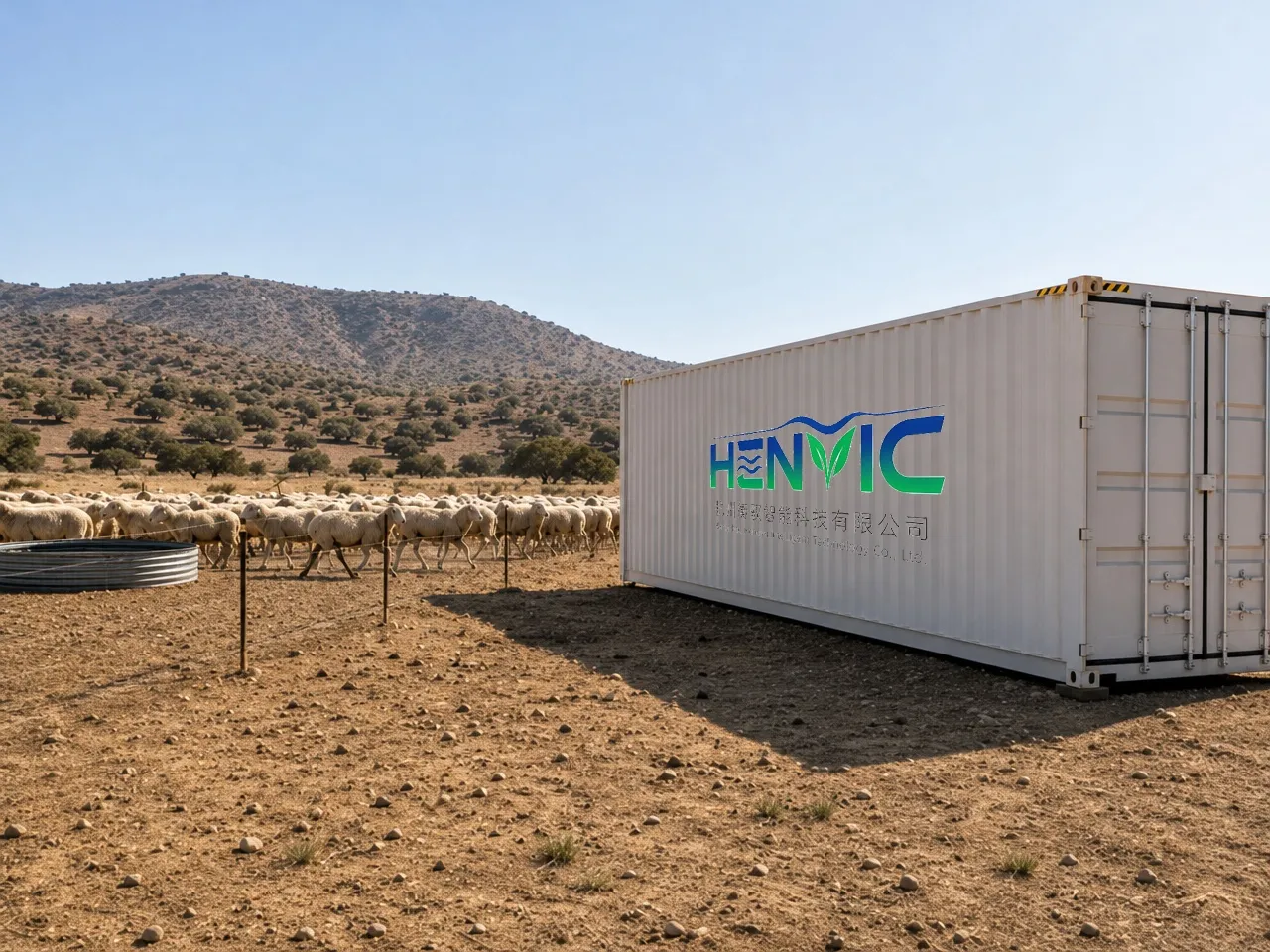
The shipping container is often described as the origin point of modern indoor farming. That framing is convenient but slightly wrong. The container was never the destination — it was a proof of concept. It demonstrated, at small scale and low risk, that food could be grown with no soil, no sunlight, and no favorable climate, using nothing but electricity, water, nutrients, and control logic. Once that proposition held, the obvious next question was not "how do we make better containers," but "what happens when we stop constraining the idea to the dimensions of a steel box?"
Vertical farming is one answer to that question. But the relationship between the two is more interesting than a simple upgrade narrative. Containers and vertical farms are not consecutive generations of the same product. They are two different optimizations of the same underlying technology — one optimized for deployability, the other for density — and understanding which one fits a given situation is the real design decision.
The container as a proof of concept
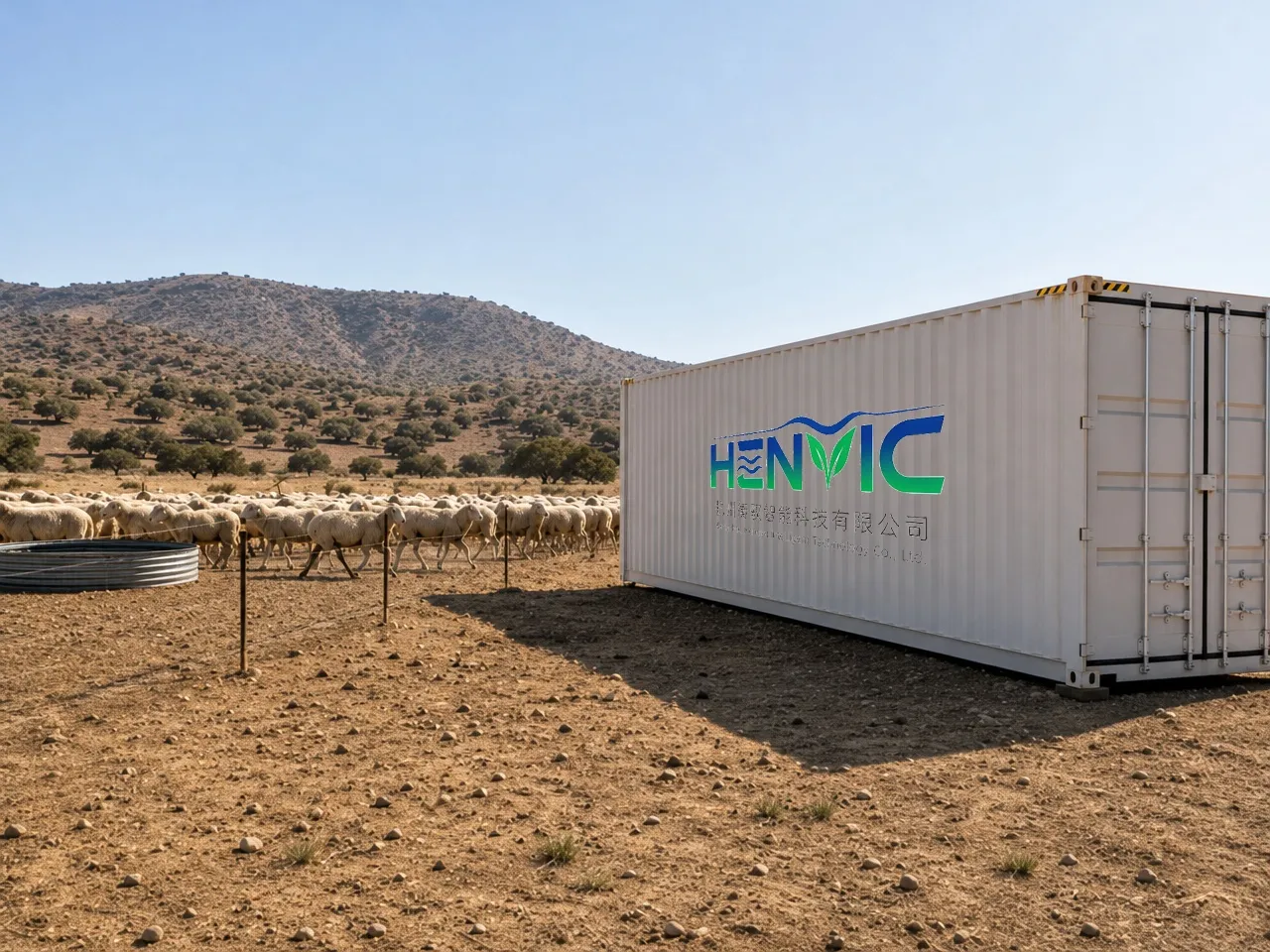
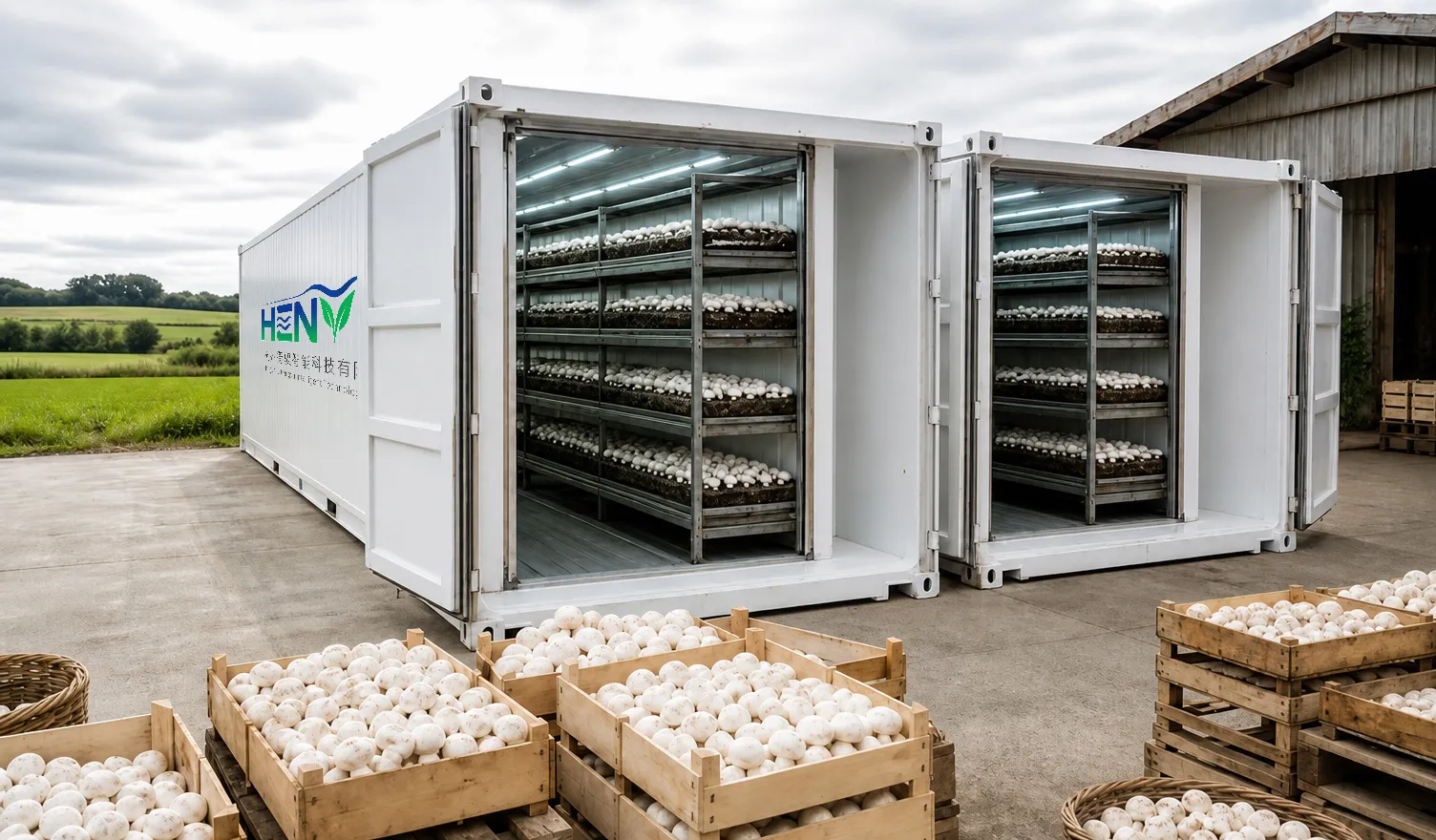
A container farm's defining virtue is not efficiency. It is independence. A forty-foot box can be dropped onto a parking lot, a rooftop, a construction site, a desert camp, or a polar station, connected to power and water, and begin producing within days. It requires no land preparation, no building permit in most jurisdictions, no structural engineering, and no local agricultural knowledge. Standard shipping dimensions mean standard handling; standard interfaces mean standard installation.
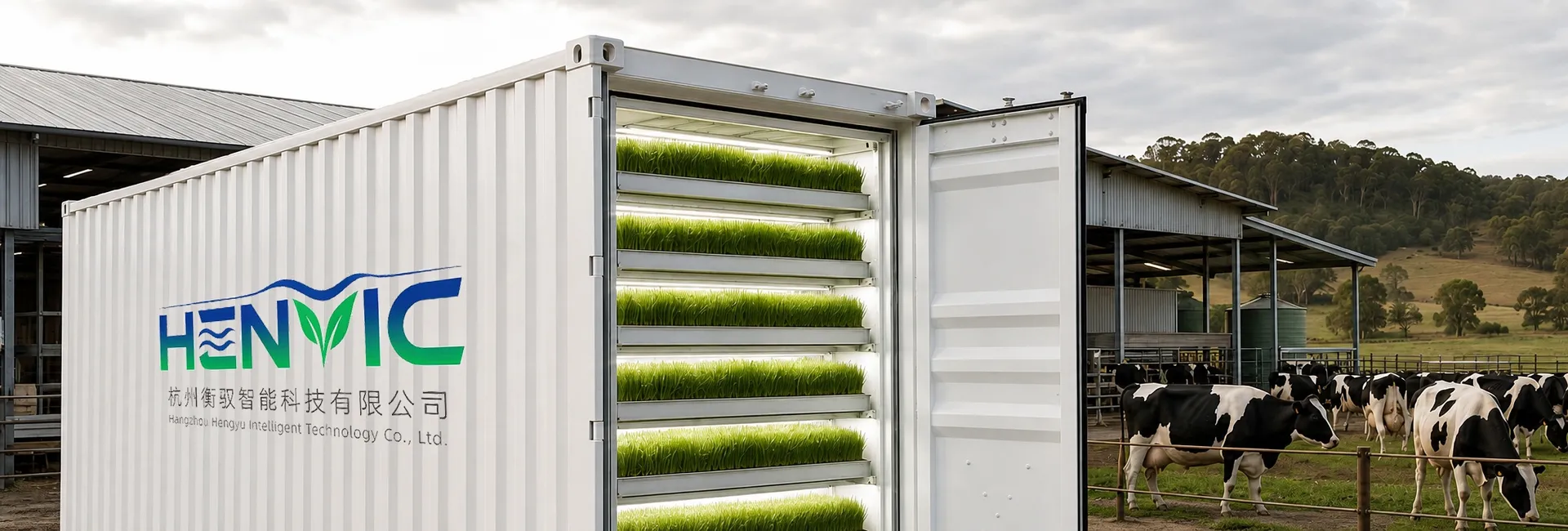
What the container proved was that the biological and engineering fundamentals work in isolation. Sealed envelopes really do decouple crops from weather. LED spectra really can substitute for sunlight. Recirculating nutrient systems really do cut water use by an order of magnitude. Automation really can let one operator supervise a growing cycle that would otherwise require daily attention.
What the container also revealed were the ceilings. Forty feet is not very much growing area — typically 30 to 60 square meters of planted surface in a single-level layout. Lighting, cooling, and dehumidification dominate the energy bill. And because a container is a sealed box with a high surface-area-to-volume ratio, it loses heat and gains heat faster than a larger, better-insulated structure would. The container is an excellent demonstration platform and a mediocre production facility. That tension is what drives the move toward vertical farming.
What changes when you scale up
A vertical farm keeps every principle of the container and removes three constraints: floor area, ceiling height, and structure.
Density replaces deployability. By stacking growing layers — commonly six to twenty tiers, sometimes more — a vertical farm multiplies the planted area per unit of footprint. A facility occupying 5,000 square meters of floor space may contain 30,000 to 50,000 square meters of growing surface. This is the central economic argument: land near population centers is expensive, and vertical density converts expensive land into productive capacity.
Height enables climate stratification. Containers are typically single-layer or lightly stacked, which means all plants share one air mass. Taller structures allow zoned climate control — different temperature, humidity, airflow, and CO₂ profiles at different heights and in different aisles. This matters for crops with different requirements and for managing the vertical temperature gradients that inevitably develop in tall rooms.
Built structure beats shipping steel. A purpose-built facility can use better insulation, more efficient HVAC systems, central chilling plants, and optimized airflow design. Energy intensity per kilogram of produce drops substantially, even though total energy consumption rises. This is the key insight that often gets lost in the container-versus-vertical-farm debate: the smaller unit is not more efficient; it is merely smaller.
The economics shift too
Containers and vertical farms occupy different positions on the cost curve, and the difference is not just scale.
A container farm's cost structure is dominated by capital recovery and electricity, spread over a small output. Its economics work when the alternative is expensive — remote islands, polar stations, desert camps, high-end urban restaurants paying premium prices for same-day freshness. It competes against airfreight, spoilage, and logistics failure, not against field agriculture.
A vertical farm's cost structure is dominated by the same two items, but spread over far more output, which lowers unit cost. That makes it competitive in a different arena: supplying supermarkets, food service, and institutional buyers in dense urban markets where conventional produce travels hundreds or thousands of kilometers and loses quality along the way.
The practical consequence is that vertical farms typically need scale to be viable — often tens of thousands of square meters of growing area — while container farms can be viable at small scale in the right location. The container is a decentralized tool; the vertical farm is a centralized one.
Where each form actually belongs
The temptation is to treat vertical farming as the mature form and containers as the prototype. A more useful view is that they solve different problems.
Containers win where the constraint is location. An island, a research station, a mine, a military base, a disaster zone — these are places where the alternative is a supply chain that is expensive, unreliable, or both. A container farm's value is measured in cost avoided rather than cost per kilogram produced.
Vertical farms win where the constraint is land and proximity to large markets. A city of ten million people needs enormous volumes of fresh produce daily, and much of it arrives wilted and expensive. A vertical farm on the urban periphery can serve that demand with shorter supply chains, longer shelf life at retail, and consistent quality year-round.
Neither replaces conventional agriculture. Staple grains, pulses, and tubers are grown at scales and costs that controlled environments cannot approach, and they will remain field crops. What vertical farms and containers compete for is the high-value, perishable, fast-turnover segment: leafy greens, herbs, microgreens, soft fruits, and specialty produce.
The technology stack is converging
What makes the container-to-vertical-farm progression coherent rather than disjointed is that the underlying technology is the same and improving in the same direction.
Lighting is the most consequential. LEDs have roughly doubled in efficiency over the past decade, and spectrum tuning has become a genuine design variable rather than a fixed setting — different red-to-blue ratios and far-red supplementation change plant morphology, flavor, and secondary metabolite content. Lighting remains the largest electrical load, so efficiency gains translate directly into economic viability.
Sensors and control have moved from reactive to predictive. Modern facilities monitor temperature, humidity, CO₂, EC, pH, dissolved oxygen, and light intensity across hundreds of zones, feeding controllers that adjust conditions continuously. Machine learning models increasingly predict growth rates, harvest timing, and disease risk rather than merely logging conditions.
Robotics is the emerging frontier. Seeding, transplanting, harvesting, and packaging are the largest remaining labor costs, and they are the hardest to automate because plants are irregular and delicate. Progress here — particularly in robotic harvesting of leafy greens and strawberries — will determine whether vertical farms can scale beyond their current labor economics.
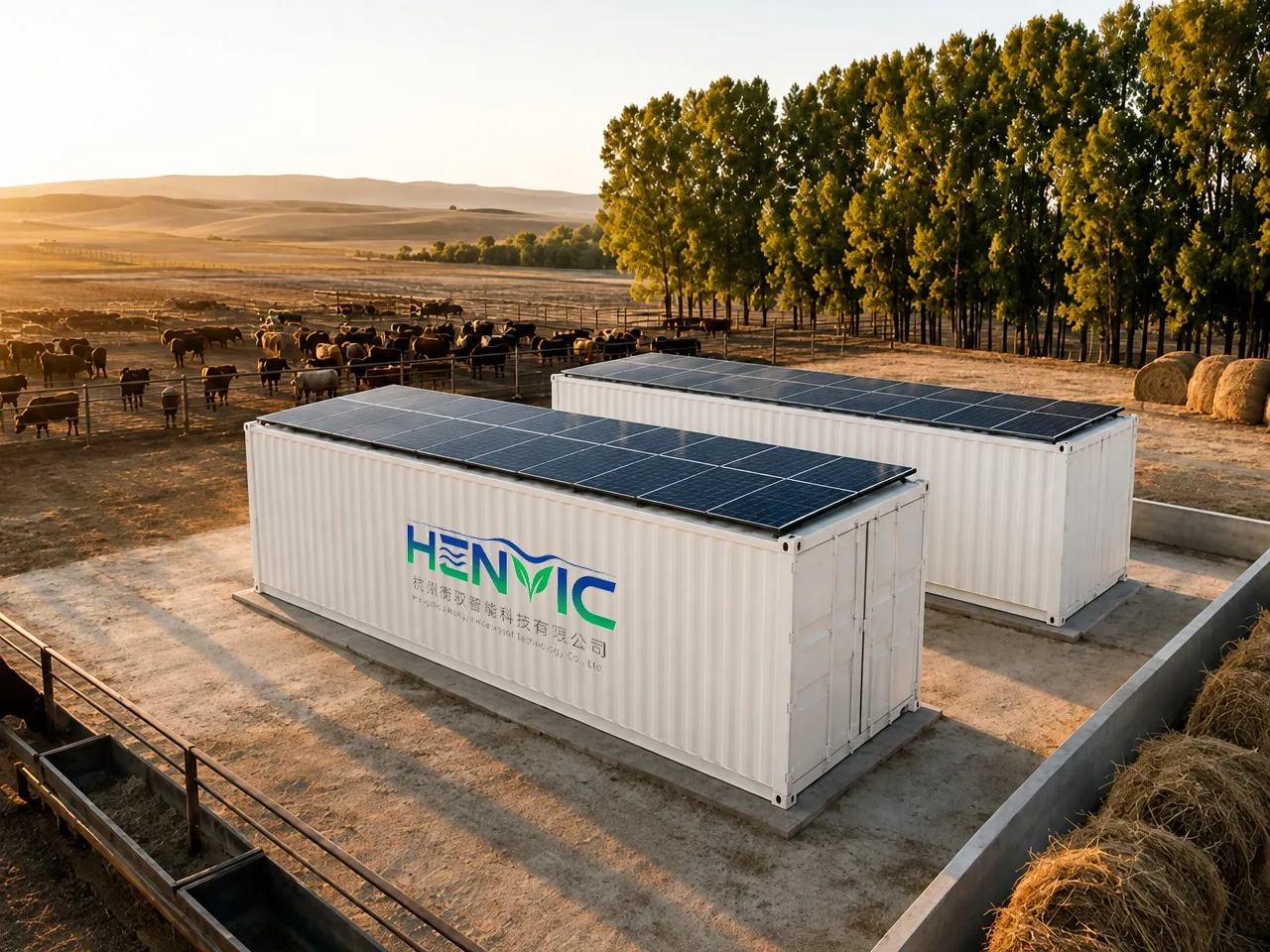
Energy integration is the quiet enabler. Waste-heat recovery, load shifting, on-site renewables, and increasingly sophisticated thermal storage are reducing both cost and carbon intensity. In some markets, vertical farms are being designed explicitly as demand-responsive assets that draw power when grid prices are low.
The honest constraints
It would be misleading to present vertical farming as a solved problem. Four constraints remain hard.
Energy intensity is the first and most fundamental. All light is artificial, and all climate control is active. Unless the power supply is cheap and low-carbon, the environmental case is weak and the economic case is fragile. This is why vertical farms cluster in regions with low electricity prices or abundant renewable generation.
Crop range is the second. Plant height, root volume, and light requirements constrain what can be grown economically. Leafy greens and herbs are well suited; fruiting crops such as tomatoes and strawberries are possible but mechanically difficult and energy-hungry; grains and root vegetables are out of reach.
Capital intensity is the third. A large vertical farm is a nine-figure capital project with a long payback period, and it must compete against field agriculture with decades of embedded infrastructure and subsidized land.
Technical complexity is the fourth. A vertical farm is a factory, and factories fail. A power outage, a chiller failure, or a control-system bug can destroy an entire crop within hours. The operational discipline required is closer to semiconductor manufacturing than to farming, and the talent pool with that combination of skills is thin.
Where the trajectory points
The most defensible prediction is not that vertical farms will replace conventional agriculture, nor that containers will become a mass-market product. It is that controlled-environment agriculture will continue to differentiate into distinct segments, each optimized for a different constraint.
Containers will remain the tool of choice for extreme environments, remote operations, and decentralized urban deployment — anywhere the value lies in independence rather than scale. Vertical farms will concentrate where land is scarce, markets are dense, and electricity is affordable. And conventional agriculture will keep the vast majority of calories, because no amount of engineering changes the basic arithmetic of sunlight being free.
The container's real contribution was not the box. It was the demonstration that the growing environment could be decoupled from geography entirely — that food production could be treated as an engineering problem rather than a climatic one. Vertical farming is what that insight looks like when it is scaled to the size of a factory and pointed at a city. The container asked whether it could be done. The vertical farm asks whether it can be done at a price. That second question is still being answered, and it depends less on biology than on electricity, robotics, and capital.